Islamic Story for Kids About Comforting a Sad Friend: The Quiet Bench
Comforting a sad friend means sitting beside them, listening quietly, and sharing something kind, even when you cannot fix what made them sad. This is the story of Hana, who learned that a quiet friend beside you can make a sad day feel lighter, and that comfort is often smaller and simpler than we think.
In this story you will meet Hana and her friend Sami, see the paper boat that sank in the school garden, watch Hana sit on the quiet bench beside Sami, share her lunch with him, and walk with him to the swings, and hear what Hana tells her mother at bedtime about helping a sad friend.
It was break time at school, and the sun was warm over the school garden. Sami had spent the whole morning making a paper boat. He had folded it carefully, pressed every edge flat with his thumb, and drawn a tiny blue flag on its mast with his pencil. At break, he floated it in the little stream that ran through the garden, and it sailed beautifully for a moment, straight and proud, past the stones and under the small wooden bridge. Then a gust of wind caught it, tipped it sideways, and pushed it under the water. Sami watched it sink, and his shoulders sank with it. He did not cry loudly, and he did not shout. He just walked slowly to the quiet bench under the big tree, sat down by himself, and stared at his wet shoes. The other children were still playing and laughing near the swings, but Sami felt very far away from all of them, as if a glass wall had come down between him and the happy noise.
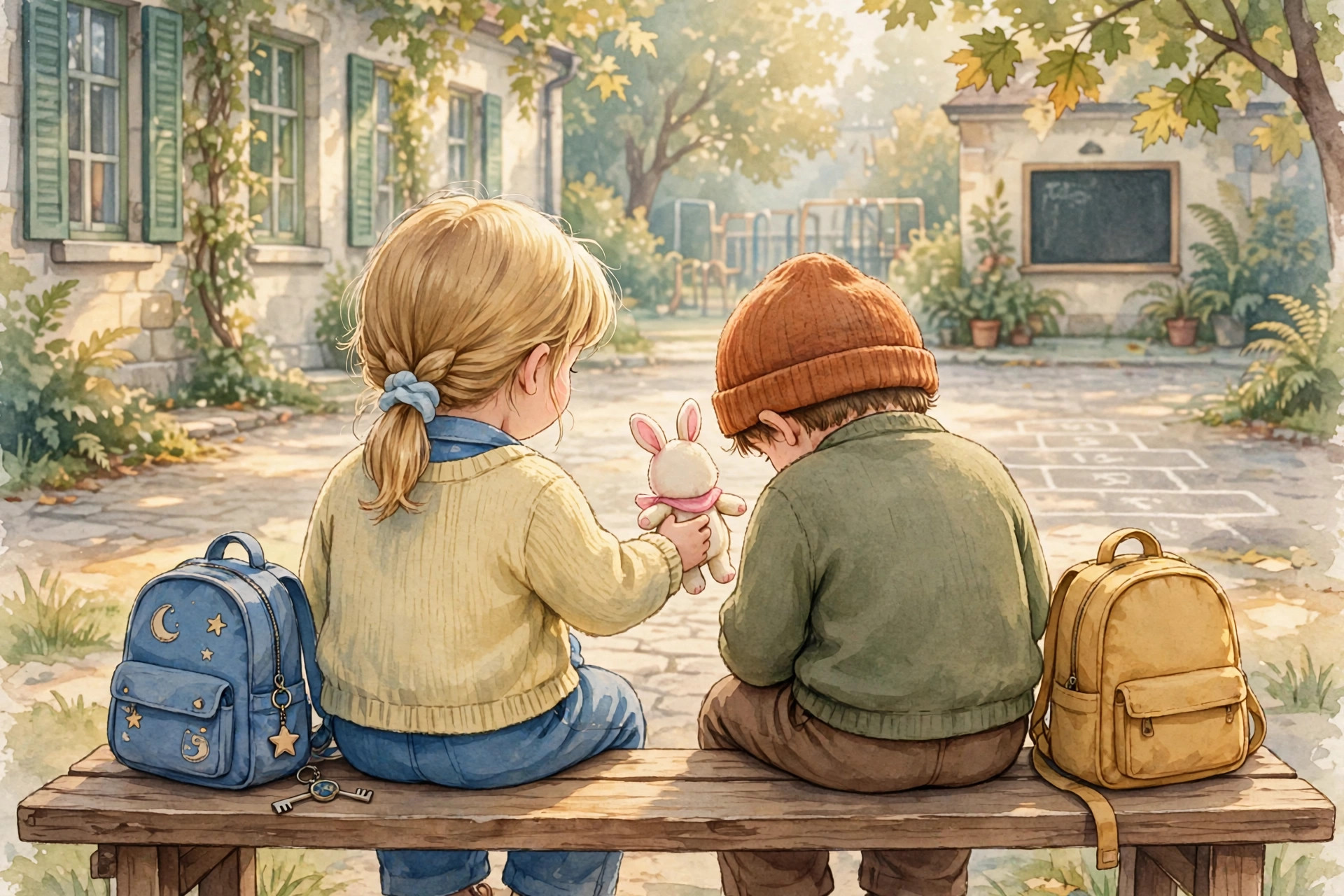
Hana saw him from across the garden. She was holding her small soft rabbit, Bun, which she carried in her school bag every day, and she was about to join the skipping game. But something about the way Sami sat, so still and so alone, made her stop. She walked over slowly and sat down beside him on the bench, leaving a little space between them, and she did not say anything at first. Then she said softly, Do you want to tell me about it, or do you just want me to sit here? Sami was quiet for a moment, and then the words came out in a rush: my boat sank, I worked on it all morning, and now it is gone. Hana listened without interrupting, without laughing, and without telling him it did not matter. She held out Bun and said, You can hold him while you tell me, if you like. Sami took the soft rabbit in both hands, and his breathing slowed down, because sometimes holding something soft helps a sad heart feel steadier, and sometimes being listened to is the first comfort of all.
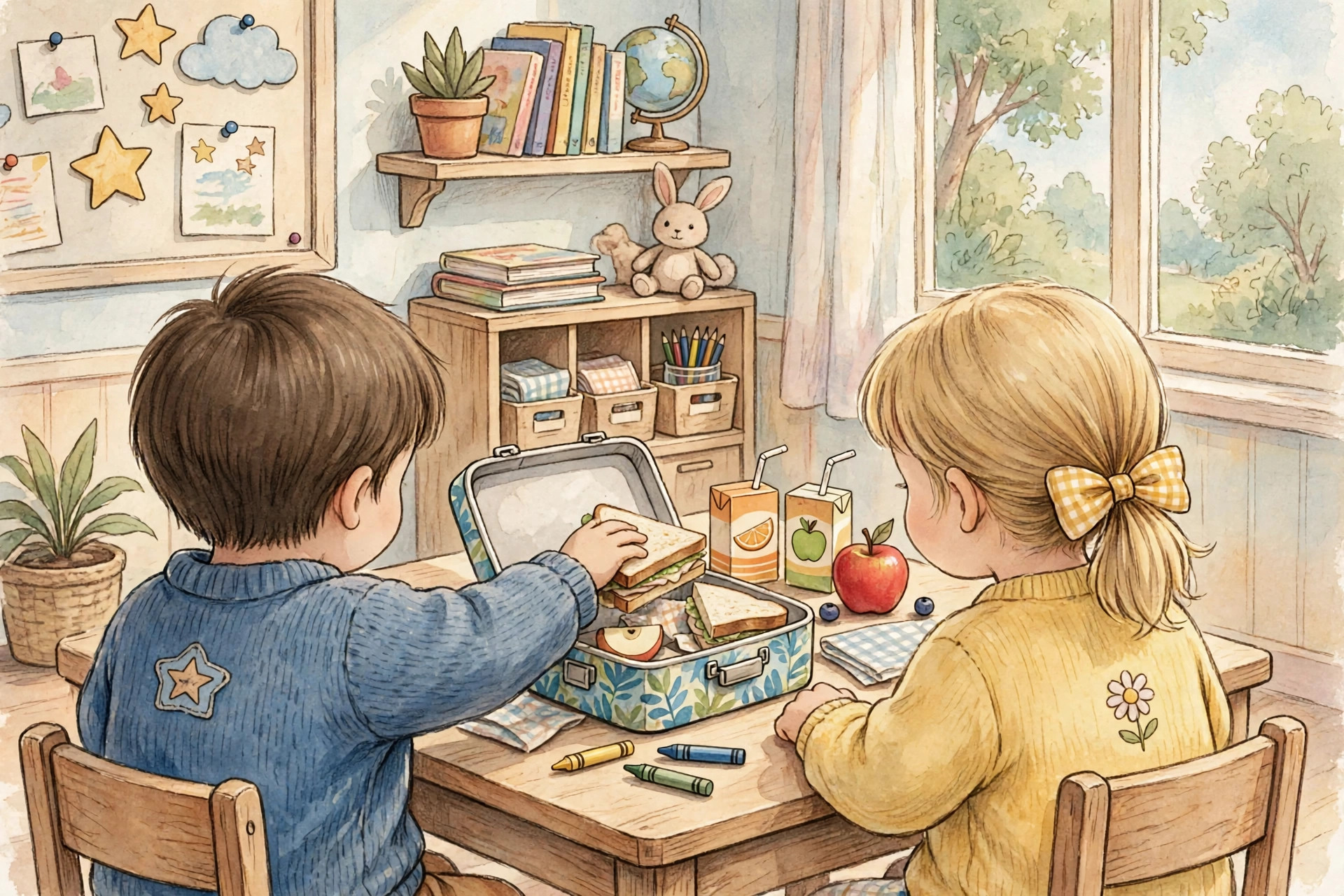
At lunch, Hana opened her lunchbox beside Sami and slid half of her sandwich across to him, along with a slice of apple from her own share. She did not make a big show of it, and she did not say, Look how kind I am. She just said, I brought too much today, have some of mine, and Sami smiled his first small smile of the day. Then Hana had an idea, and she said it gently, so that Sami could say no if he wanted to: Would you like to make a new boat together after school, a stronger one, with two flags this time? Sami thought about it, and then he nodded, slowly at first, and then properly. They spent the rest of lunch planning their new boat: a wider base so it would not tip, a taller mast, and one red flag and one blue flag, so that everyone would know it belonged to both of them. By the time lunch was over, Sami's sadness had not completely gone, but it had grown smaller, like a cloud that is still there but no longer covers the whole sky.
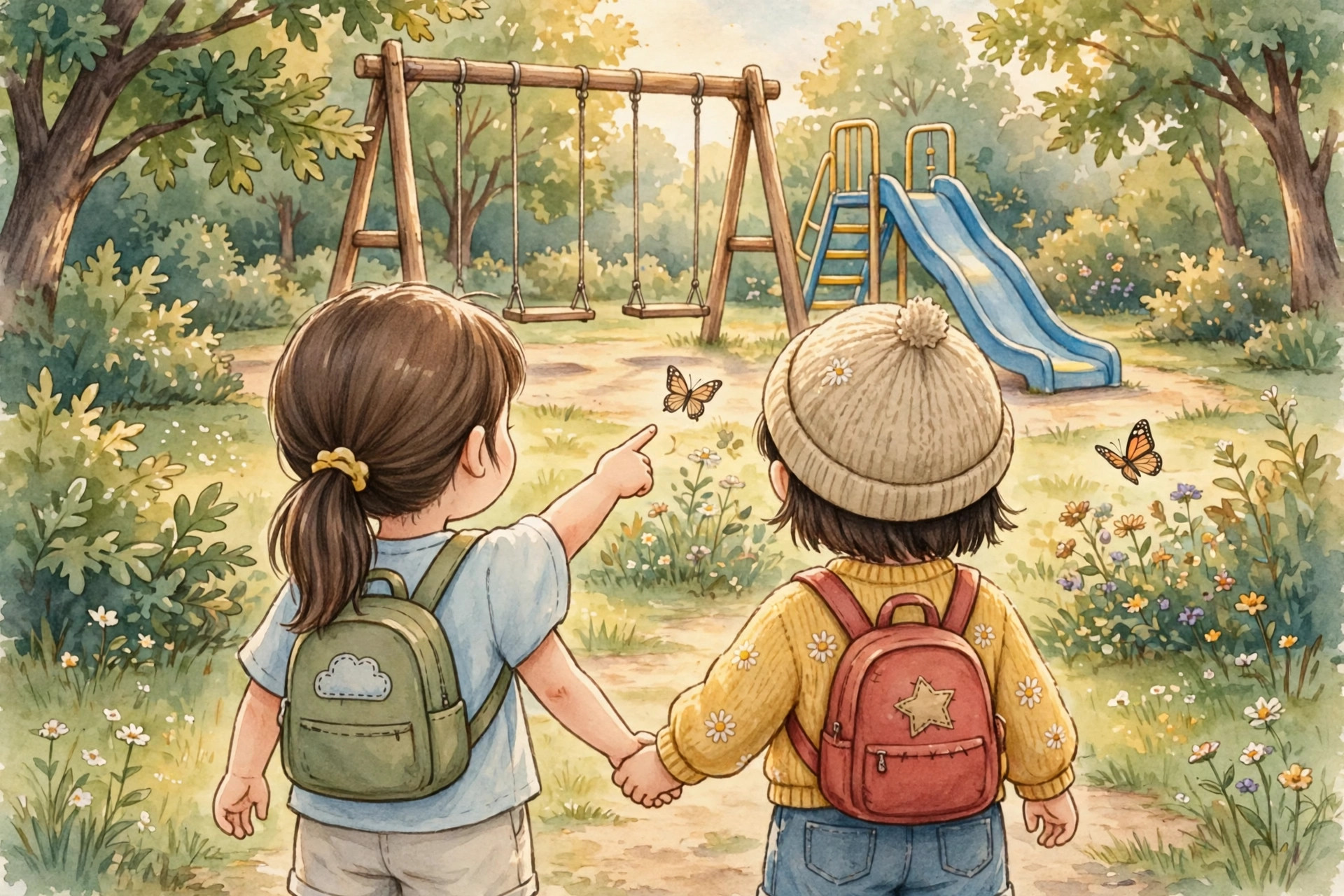
After school, they walked together to the swings, and Hana pointed at a butterfly dancing over the flowers, just so Sami would have something gentle to look at besides his sad thoughts. They swung side by side for a while, not racing, not shouting, just swinging in a slow, easy rhythm, and Sami began to laugh again when Hana's swing squeaked in a funny way. That evening, as her mother tucked her blanket around her, Hana said, Mummy, I did not fix Sami's boat today, but I think I helped him a little. Her mother smiled and said, You did more than you think, Hana. When a friend is sad, sitting beside them, listening to them, and sharing what you have is a kind of help all by itself. You cannot always fix the sad thing, but you can always make the sad day less lonely. Hana closed her eyes and thought of the new boat with two flags, and she fell asleep feeling quietly proud, because she had learned that comfort is not a big loud thing at all. It is a quiet bench, a listening ear, a shared sandwich, and a friend who stays.
Lesson for today: Comforting a sad friend means sitting beside them, listening without interrupting, sharing something kind like a snack or a soft toy, and inviting them to do something gentle together. You cannot always fix what made them sad, but you can always make their sad day less lonely.
Question: When your friend is sad, what is one quiet, kind thing you can do first, before you try to fix the problem or cheer them up with jokes?
Try it tonight - a tiny family challenge: Practise the comfort steps at home with a toy or a puppet. One person pretends to be sad about a lost toy, and the other practises sitting beside them, asking, Do you want to tell me, or shall I just sit here, listening without interrupting, and offering one kind share. Then swap roles, and talk together about which part felt most comforting, and why listening felt better than rushing to fix everything.
For parents - reading this story together: Read the bench scene slowly, and pause just before Hana speaks, so your child can guess what a good friend might say. Then try these three questions: Why did Hana sit down quietly instead of rushing over with jokes? Why did listening help Sami more than being told his boat did not matter? What could your child share or offer the next time a friend is sad? As a small activity, agree on one comfort sentence your child can use, such as, I am here, take your time, because children comfort more kindly when they already have gentle words ready.
Q: My child always tries to fix a sad friend's problem straight away, or tells jokes to cheer them up. How can this story help? A: Use the story to teach the order of comfort: sit first, listen second, and only then offer help or play. Explain that jokes and fixes can feel like the sadness is being brushed away, while quiet listening tells the friend their feelings matter. Practise the bench scene, so your child learns that staying beside a sad friend is real help.
Q: What if my child does not know what to say to a sad friend? A: Give them a few short sentences to keep ready, such as, I am here, Do you want to tell me about it, and Would you like to sit with me. Short sentences are enough, because a sad friend needs presence more than perfect words. Silence beside a friend is not awkward; it is kind.
Q: My child gets upset too when a friend is sad. How do I help them cope? A: Name their feeling first, and explain that caring hearts often feel sad alongside a friend, which is a sign of kindness, not weakness. Teach them a reset: take one slow breath, hold something soft, or ask a grown-up for help if the sadness feels big. Children comfort others best when they know their own feelings are also allowed and supported.
Q: Should my child share their own toys or food with a sad friend? A: Sharing can comfort, but it should be the child's own free choice, never forced by a grown-up. Praise the choice to share, and protect it: a comfort toy can be offered to hold for a while, rather than given away. The lesson is generosity with boundaries, so sharing stays joyful for the giver as well as comforting for the friend.
Q: How long should a read-aloud session for this story be? A: About four to six minutes, with pauses for the story questions. That length suits ages five to nine well: long enough for the lesson to land, short enough to hold attention. If your child wants more, reread the bench scene, or act out a comfort game at home with toys, rather than rushing on to another story.
Source note: This story is original fiction, based on the Islamic teaching of kindness, mercy, and comforting others, including gentleness with a sad heart and generosity with what we have (meaning in our own words).
Based on the Islamic teaching of kindness, mercy, and comforting others (meaning in our own words); story is original fiction.