Islamic Story for Kids About Helping a New Classmate: The Welcome Card
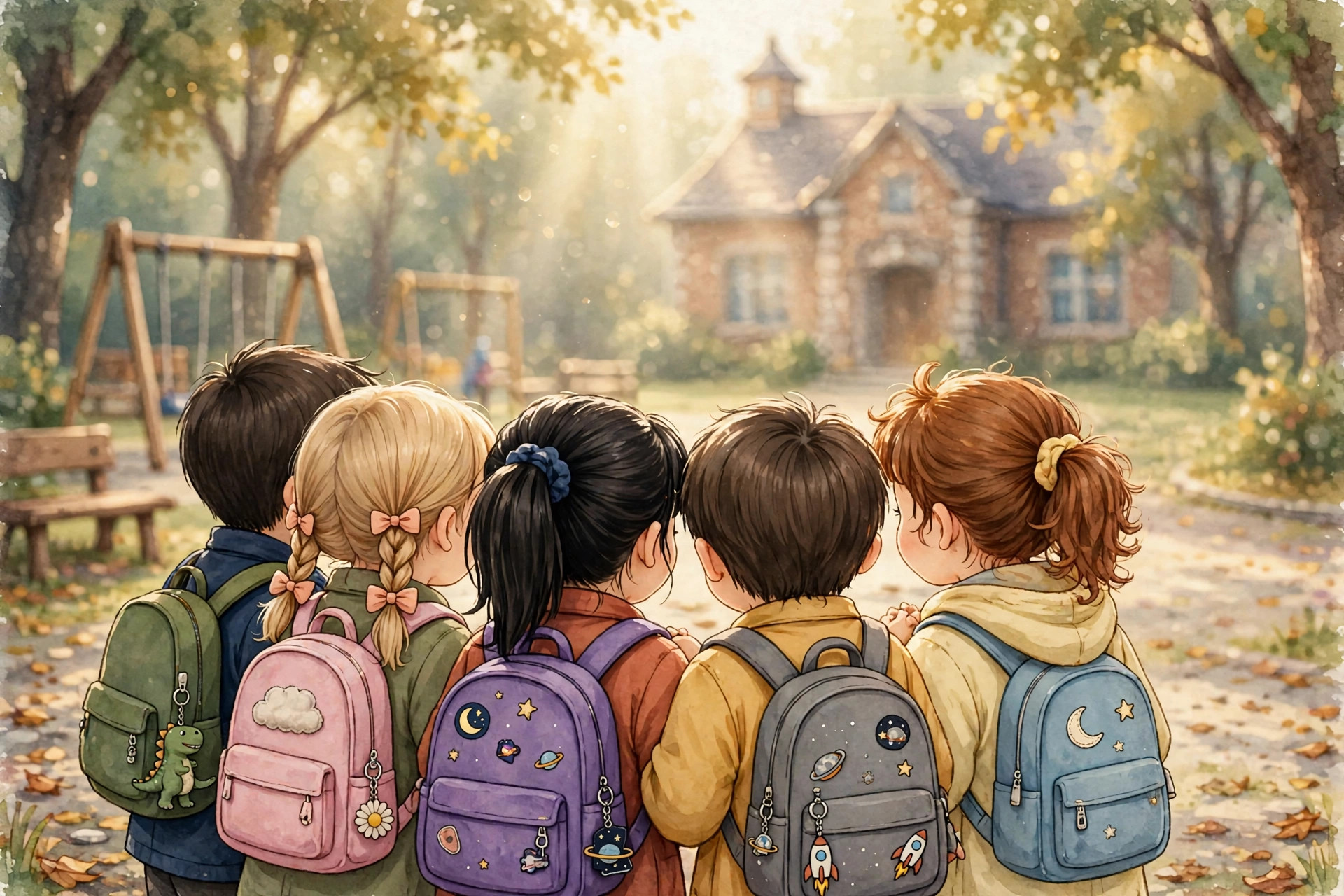
Being new at school can feel very big and very lonely. Everyone else already knows where to sit, who to play with, and what the teacher means by the funny class jokes. But one kind classmate can change a whole day, and this is the story of Layla, a new boy called Omar, and the welcome that made him feel like he belonged from the very first morning.
In this story you will meet Omar on his first morning at a new school, see Layla show him around the classroom, watch what happens when he is left out of a game at break time, share lunch with him under the big tree, and find out what the class makes for him before home time.
On Monday morning, Omar stood by the school gate holding his bag very tightly. His family had moved to a new town, and this was his first day in a new school. He did not know anyone, and he did not know where his classroom was. The other children ran past him, shouting to their friends, and Omar felt smaller and smaller. Then his teacher, Miss Hana, smiled and said, Class, this is Omar. He is joining us today. Please make him feel welcome. Layla remembered her own first day, two years ago, when she had stood in the very same spot, feeling just as nervous. She walked up to Omar and said, Hello, Omar. My name is Layla. Would you like to walk in with me? Omar nodded, and his shoulders relaxed a little, because the hardest part of a first day is standing alone, and now he was not standing alone anymore.
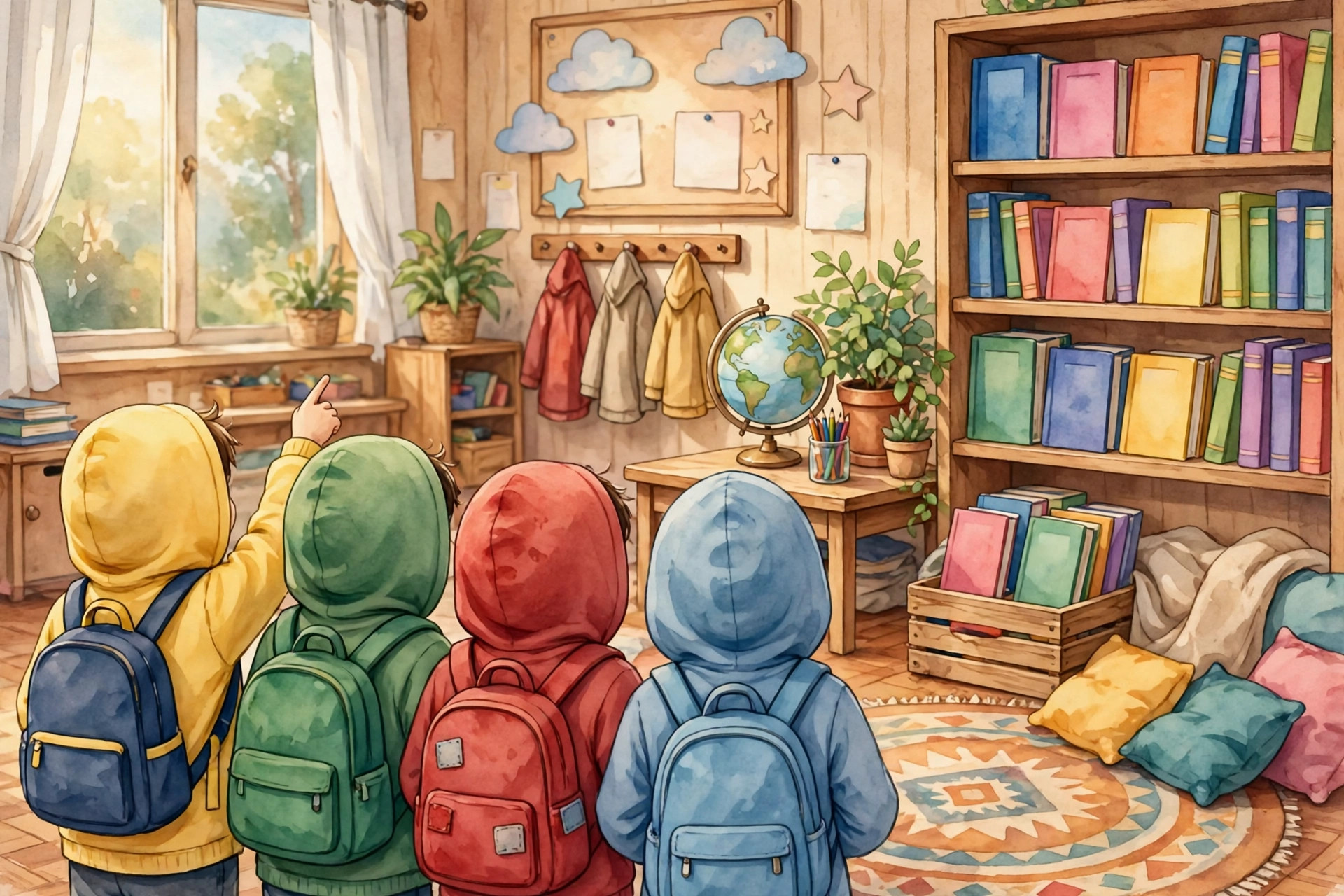
Inside the classroom, Layla showed Omar everything he needed to know. She showed him his peg, where his coat would hang, and his tray, where his books would live. She showed him the reading corner, with its soft cushions and picture books, and she told him that on Fridays the class chose a story together. She taught him the class rules in a friendly way, like raising a hand and tidying up after art, so he would not have to guess. Then she asked him a question that nobody had asked him yet that morning: What games do you like to play, Omar? Omar smiled for the first time and said he loved football and building towers with blocks. Layla said, We have blocks in the corner, and football at break time, and I will play with you. Omar's eyes brightened, because a new school is much less scary when you already know one kind person and one game you can join.
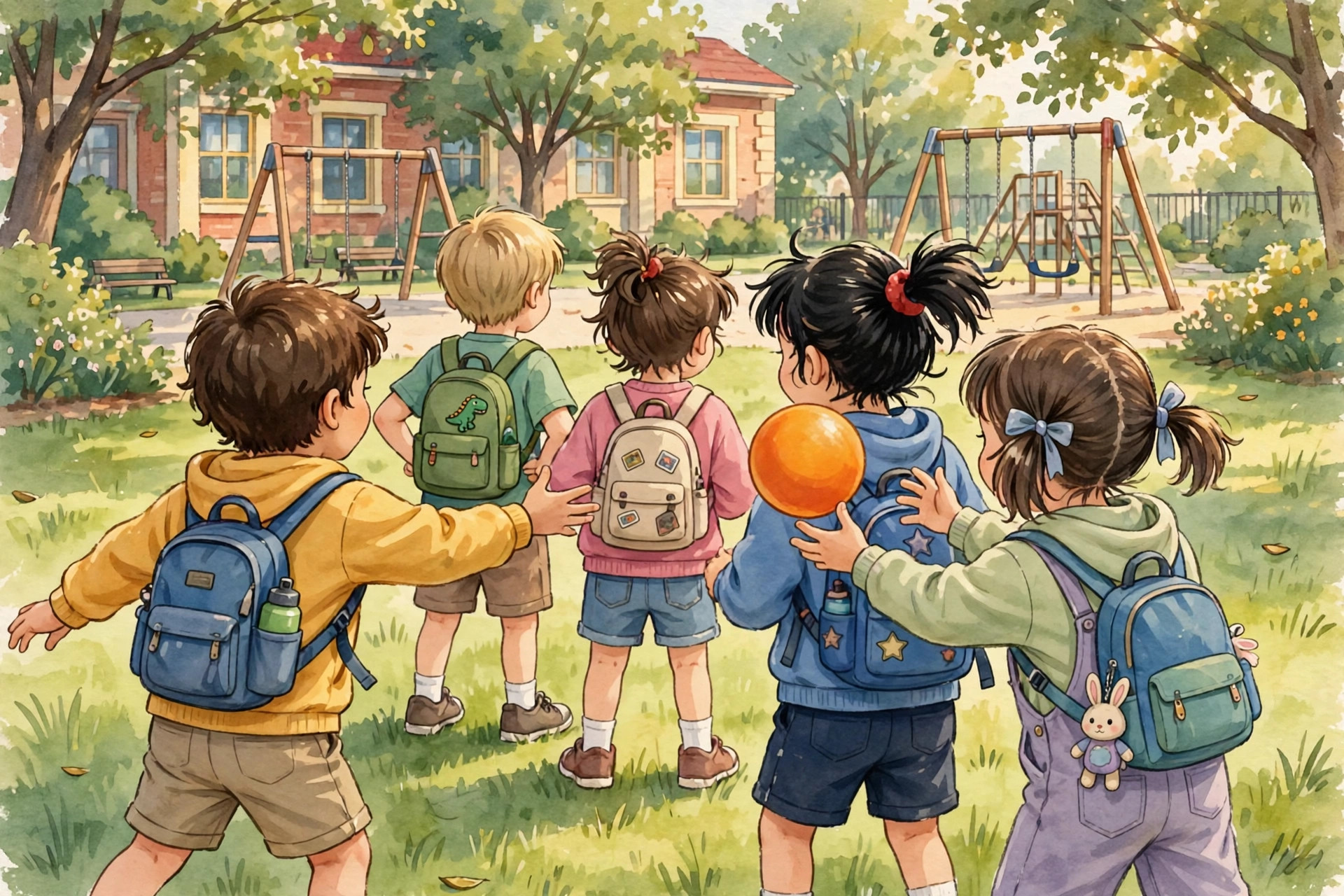
At break time, the class ran out to play football, and Omar stood at the edge of the field, watching. He wanted to join, but he did not know how to ask, and he was afraid the others would say no. Layla saw him standing there, and she ran over with the ball. Come and play with us, Omar, she said. You can be on my team. She explained the rules simply, without laughing at him, and when Omar passed the ball to a boy called Yusuf, Yusuf passed it back and cheered, Well done, Omar! Omar ran faster after that, and he laughed when the ball bounced over his foot, and the other children laughed with him, not at him. By the end of break time, Omar was not the new boy standing at the edge anymore. He was part of the team, and Layla felt happy inside, because inviting one person can change the whole game for everyone.
At lunch time, Layla sat under the big tree with her friends and waved Omar over. She shared her apple slices with him, and Omar shared his biscuits, and they talked about their old schools, their favourite colours, and the funny things their little brothers did. After lunch, the class made Omar a welcome card. Each child drew a small picture or wrote one kind word, and Miss Hana stuck it on the wall near Omar's peg. Omar looked at the card for a long time, and then he said, Thank you. This is the best first day I have ever had. On the way home, Layla told her mother, Omar was scared this morning, and now he has friends. Her mother smiled and said, That is what a welcome does, Layla. It turns a stranger into a friend, and a new school into a home.
Lesson for today: Helping a new classmate feel welcome means noticing when someone is alone, saying hello first, showing them around, inviting them to play, and sharing lunch with them. A small welcome can turn a scary first day into a happy one.
Question: Has a new child ever joined your class or your group? What is one kind thing you could say or do on their very first day to help them feel welcome?
Try it tonight - a tiny family challenge: Practise a welcome together at home. Take turns being the new child and the welcomer. The welcomer says, Hello, what is your name? and shows the new child around the room, offers a seat, and invites them to play. Then talk about it together: how did it feel to be welcomed, and how did it feel to welcome someone? A welcome practised at home is much easier to give at school.
For parents - reading this story together: Read the gate scene slowly, and pause before Layla walks up to Omar, so your child can guess what she will do. Then try these three questions: How do you think Omar felt at the gate, and what changed his feeling? Why did Layla ask Omar what games he liked, instead of only telling him the rules? What could your child do this week if a new child joins their class? As a small activity, help your child practise one welcome sentence and one invitation to play, because children welcome others more bravely when they have already said the words once at home.
Q: My child is shy and finds it hard to approach a new classmate. How can this story help? A: Use the story as a safe rehearsal. Practise one simple sentence, such as, Hello, my name is, would you like to play? Shy children do not need to become loud; one kind invitation is enough. Praise the attempt, not only the result, and remind them that Layla felt nervous before she walked up to Omar.
Q: What if my child tries to welcome a new classmate and the other children laugh or ignore them? A: Tell your child that kindness is still the right choice, even when others do not join in yet. Talk to the teacher if teasing continues, and practise a calm reply at home, such as, I am just being kind. Often one brave welcomer gives other children permission to be kind too, and the group follows more slowly than we wish.
Q: Should I tell my child to share their lunch with a new classmate every day? A: Sharing once or twice is a lovely welcome, but a daily duty can feel like a burden and cause resentment. Encourage your child to invite the new classmate to sit together, share a game, or trade one small snack sometimes. Friendship grows from sitting together and playing together, not from giving food away every single day without fail.
Q: My child was once the new child and nobody welcomed them. How do I help them still welcome others? A: Acknowledge their hurt honestly first, without rushing past it, and tell them their experience makes them especially able to notice a lonely child. Read this story together and ask what they wish someone had done for them. Turning a painful memory into one kind action often heals more than any lecture about kindness ever could.
Q: How long should a read-aloud session for this story be? A: About four to six minutes, with pauses for the story questions. That length suits ages five to nine well: long enough for the lesson to land, short enough to hold attention. If your child wants more, reread the break-time game scene, or act out a welcome at home with toys, rather than rushing on to another story.
Source note: This story is original fiction, based on the Islamic teaching of kindness, hospitality, and making others feel welcome, including loving for others what you love for yourself (meaning in our own words).
Based on the Islamic teaching of kindness, hospitality, and loving for others what you love for yourself (meaning in our own words); story is original fiction.