Islamic Story for Kids About Patience with a Younger Sibling: The Slow Tower
Patience with a little brother or sister means waiting kindly while they do things slowly, because they are still learning how the world works. This is the story of Sana, who loved to play fast, and her little brother Yusuf, who did everything slowly, and how Sana discovered that waiting kindly can make play happier for both of them.
In this story you will meet Sana and her little brother Yusuf, see the tall block tower that wobbled, watch a very slow puzzle piece find its place, walk slowly to the park together, and hear what Sana says at bedtime about waiting.
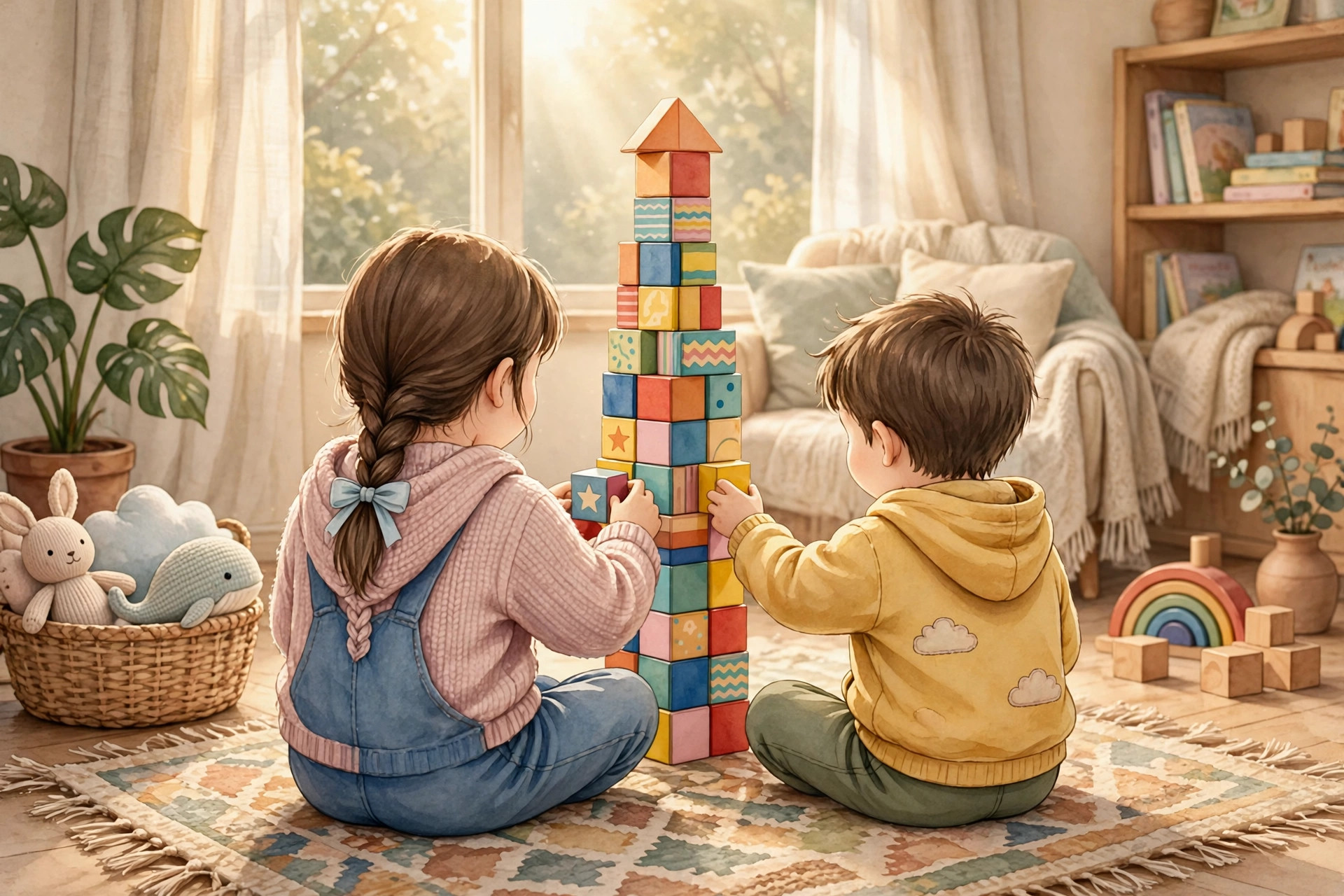
Sana was eight years old, and Yusuf was three. On Saturday morning, Sana wanted to build the tallest block tower in the whole house. She stacked the red blocks quickly, then the blue ones, then the yellow ones, and the tower grew taller and taller until it nearly reached her knees. Yusuf watched with big, round eyes, and then he picked up a green block with both hands, held it very carefully, and placed it on top very, very slowly. Sana felt the impatient words rising in her chest, Hurry up, Yusuf, but she remembered what her mother had once told her: little hands need more time, because they are still learning. So Sana took a quiet breath, waited, and watched. The tower wobbled once, twice, and then it stood still, tall and proud, in the middle of the rug. Yusuf clapped his hands and shouted, Tower! and Sana laughed, because the tower she had wanted to build fast was now a tower they had built together.
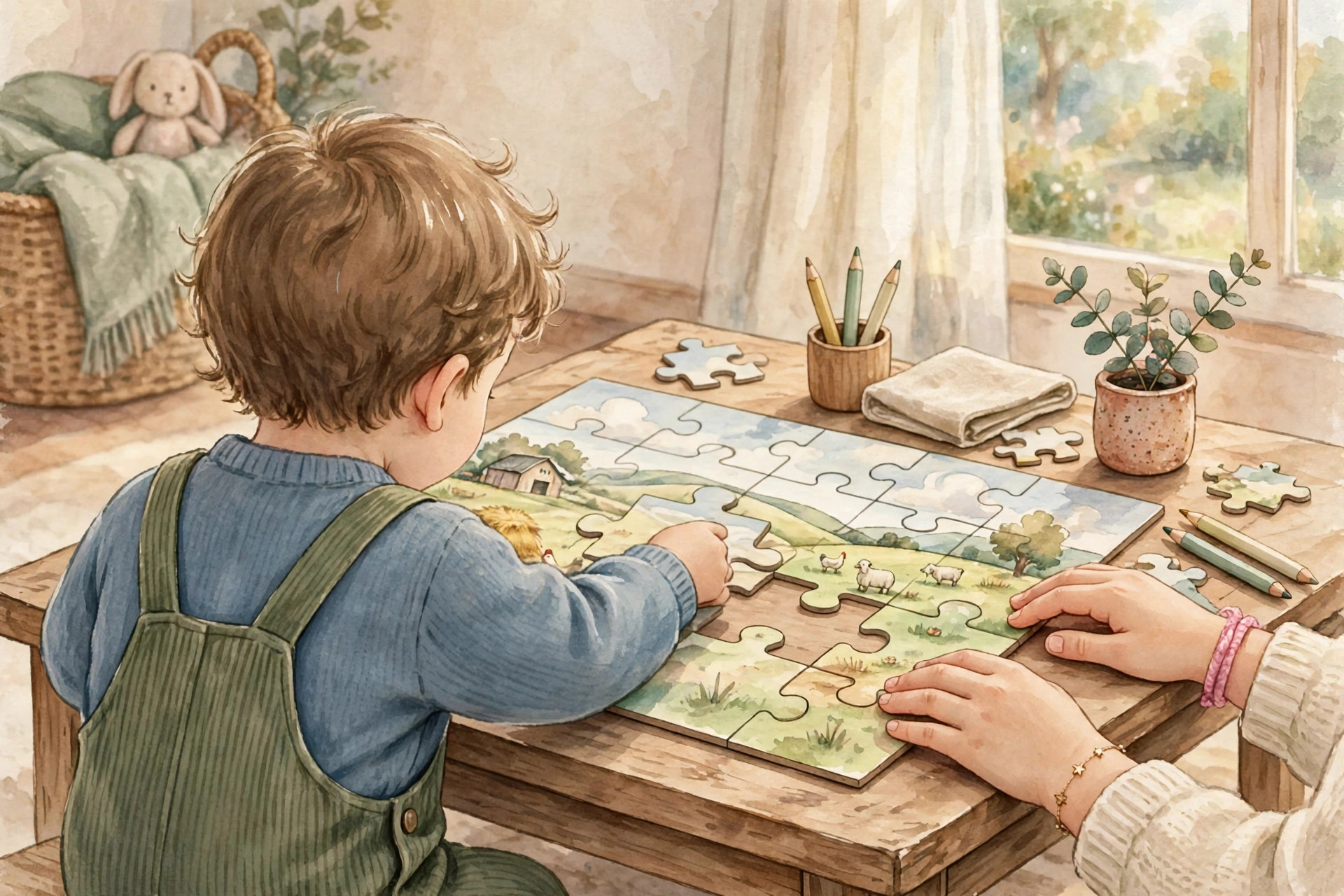
After lunch, they tried a big farm puzzle on the low table. Yusuf picked up a piece with a sheep on it and turned it round and round in his hands. He tried it in one corner, but it did not fit. He tried it in another corner, but it did not fit there either. Sana's hand reached out before she could stop it, because she knew exactly where the piece belonged, and it would have been so quick to just put it in herself. But then she stopped. She counted silently in her head, one, two, three, four, five, and she said gently, Try turning it round, Yusuf. Yusuf turned the piece slowly, pushed it softly, and click, it fitted perfectly into place. His whole face lit up like a lamp, and he said, I did it! Sana felt something warm and proud inside her, warmer than if she had finished the puzzle herself, because waiting had given Yusuf the chance to succeed on his own.
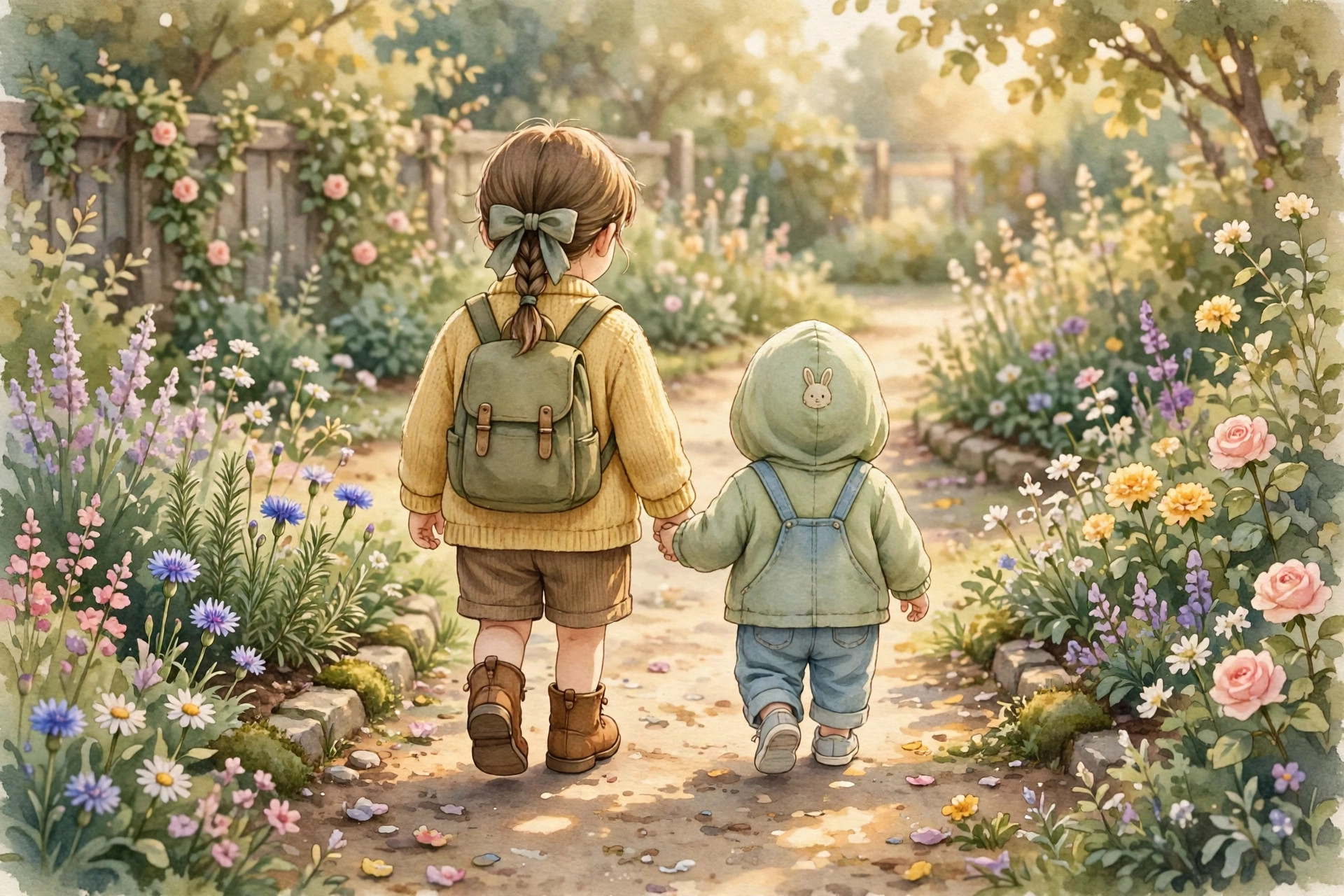
In the afternoon, they walked to the park together, and this was the hardest waiting of all. Yusuf's legs were small, and his steps were small too. He stopped to pick up a smooth grey stone, and then he stopped again to look at a yellow flower, and then he stopped a third time to watch a cat sitting on a garden wall. Sana walked ahead, and then she turned back, because walking ahead alone was not a walk together at all. She took Yusuf's small hand in hers and sang a slow counting song as they walked, one step, two steps, three steps, four, and Yusuf sang along in his little voice, sometimes forgetting the words and laughing at himself. When they reached the park gate together, Yusuf looked up at her and said, Sana waited for me, and Sana felt her heart grow warm, because being waited for is a kind of love, and she had just given it to her little brother.
At the park, they shared orange slices on a bench, and Yusuf gave Sana the biggest slice, because, he said, Sana waited. On the way home, Sana thought about her whole day: the tower, the puzzle, and the slow walk. That night, as her mother tucked her blanket around her, Sana said, Waiting was hard at first, Mummy, but then it felt happy. Her mother smiled and said, That is patience, Sana. Patience is kindness with time. It means giving someone the time they need, without grabbing, without shouting, and without hurrying them. Sana closed her eyes and whispered, Tomorrow I will wait again, and she fell asleep dreaming of tall towers, farm puzzles, and slow, happy walks with her little brother.
Lesson for today: Being patient with a younger brother or sister means giving them time to try, waiting without grabbing or shouting, and walking at their speed. When you wait kindly, little children learn bravely, and play becomes happy for everyone.
Question: When your little brother or sister does something slowly, what is one kind thing you can do while you wait, instead of grabbing the toy or shouting at them?
Try it tonight - a tiny family challenge: Build a tower or a puzzle together, and practise the waiting rule. The older child counts silently to five before helping, and the younger child gets to try first, every time. Then talk about it together: how did waiting feel, and how did it feel to succeed without help? A patient wait practised at home is much easier to give tomorrow.
For parents - reading this story together: Read the puzzle scene slowly, and pause just before Sana's hand reaches out, so your child can guess what she will do. Then try these three questions: How do you think Sana felt when Yusuf was slow, and what changed her feeling? Why did counting to five help Sana more than grabbing the puzzle piece? What could your child practise this week when a younger sibling is slow? As a small activity, agree on one waiting sentence your child can use, such as, Take your time, I will wait, because children wait more kindly when they already have the words ready.
Q: My older child always grabs the toy and finishes the task for their younger sibling. How can this story help? A: Use the story as a safe rehearsal for the waiting rule. Agree that the younger child always tries first, while the older child counts silently to five before helping. Praise the waiting itself, not only the finished tower or puzzle, and remind them that Sana felt prouder when Yusuf succeeded alone than when she finished it herself.
Q: My child says waiting for a younger sibling is boring. What can I say? A: Give waiting a small job of its own, so it does not feel empty. The older child can count, sing a slow song, or describe what the younger child is doing well. When waiting has something kind to do, boredom fades, and the older child begins to enjoy watching a little brother or sister learn.
Q: What if the younger sibling breaks the tower or ruins the game while the older child waits? A: Name the difference kindly: patience does not mean letting everything break without a word. Teach the older child to protect the game gently, for example, Let us build your part here, while still giving the younger child a real job in the play. Frustration is normal, and a calm repair together teaches more than either shouting or giving up does.
Q: My older child feels the younger one gets all the attention. How do I keep patience fair? A: Acknowledge the feeling honestly first, without dismissing it, and give the older child their own special time when the younger sibling naps or plays alone. Explain that waiting is a skill they are learning, not a punishment for being older, and thank them specifically when they wait kindly, so their patience is seen and valued at home.
Q: How long should a read-aloud session for this story be? A: About four to six minutes, with pauses for the story questions. That length suits ages five to nine well: long enough for the lesson to land, short enough to hold attention. If your child wants more, reread the slow walk to the park, or act out a waiting game at home with blocks, rather than rushing on to another story.
Source note: This story is original fiction, based on the Islamic teaching of patience, kindness to younger children, and gentleness in the family, including being patient with those who are still learning (meaning in our own words).
Based on the Islamic teaching of patience and gentleness with younger children (meaning in our own words); story is original fiction.