Islamic Story for Kids About Saying Thank You Without Being Asked: The Mended Bag
Saying thank you without being asked is one of the kindest things a child can do. When someone does something good for you quietly, without asking for praise, noticing it and thanking them yourself makes their whole day brighter, and it makes your own heart lighter too. This is the story of Zara, who learned that the best thank you is the one nobody has to remind you to say.
In this story you will meet Zara and her red school bag with the yellow star, see the strap snap on the walk to school, meet Chacha Imran, the kind caretaker who sweeps the yard and waters the plants, watch Zara find her bag mended with blue thread, and hear the thank you she says all by herself at the school gate.
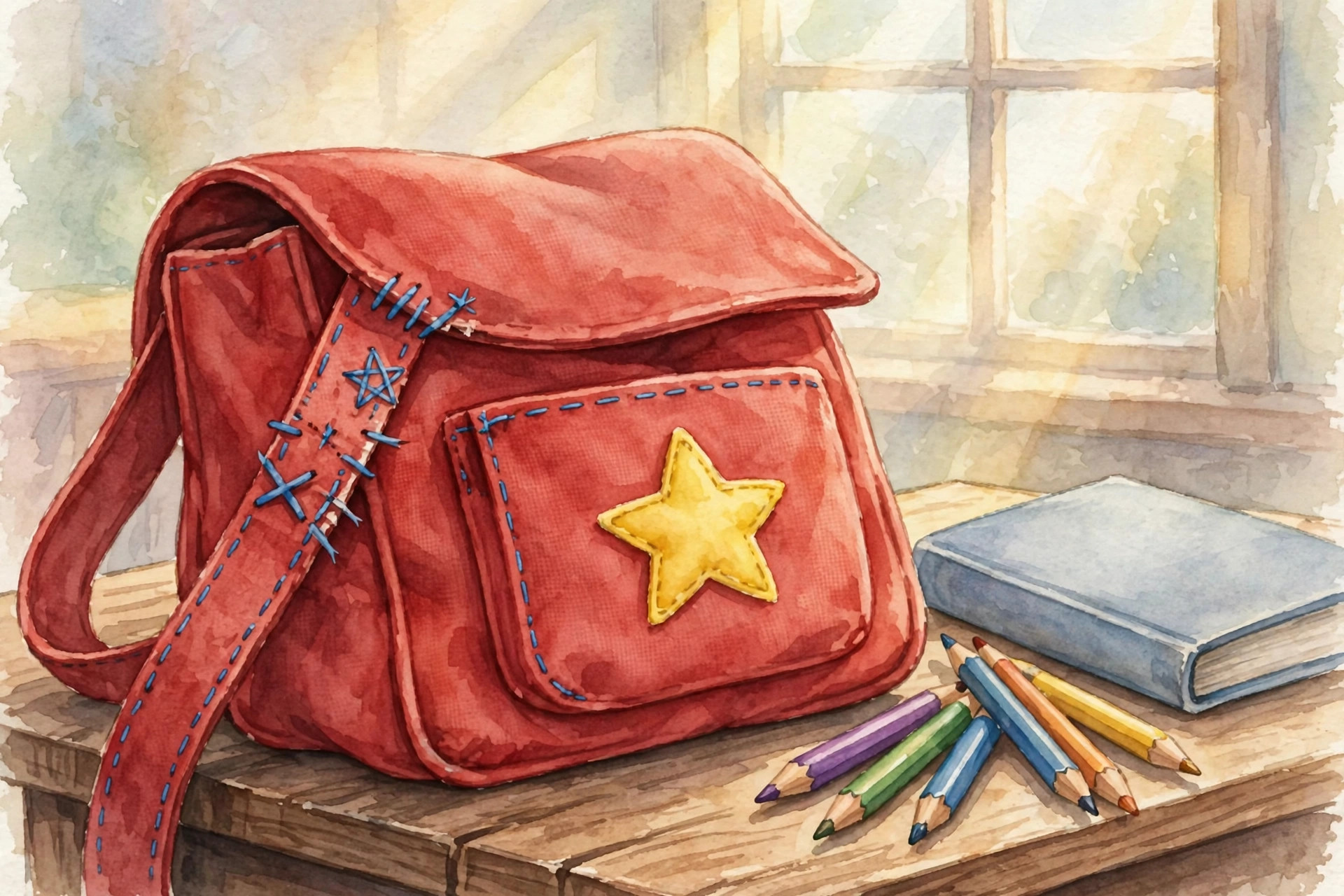
Zara was seven years old, and she loved her red school bag more than any of her toys. It had a bright yellow star sewn on the front pocket, and it carried everything that mattered to her: her pencils, her reading book, her lunchbox, and a small smooth stone she had found on the beach. One Monday morning, on the walk to school, the strap suddenly snapped with a little pop, and the bag tumbled to the pavement. Her pencils rolled in every direction, her reading book flopped open, and the smooth stone bounced away under a parked car. Zara gathered everything up as best she could, tied the torn strap in a big knot, and walked the rest of the way with the bag bumping against her hip. At school she hung it on her peg and tried to forget about it, but the knot kept slipping, and every time she looked at it her shoulders drooped a little. As he swept the yard outside her classroom window, Chacha Imran, the kind old caretaker, noticed the torn strap and the drooping shoulders, and he remembered, even though he said nothing at all.
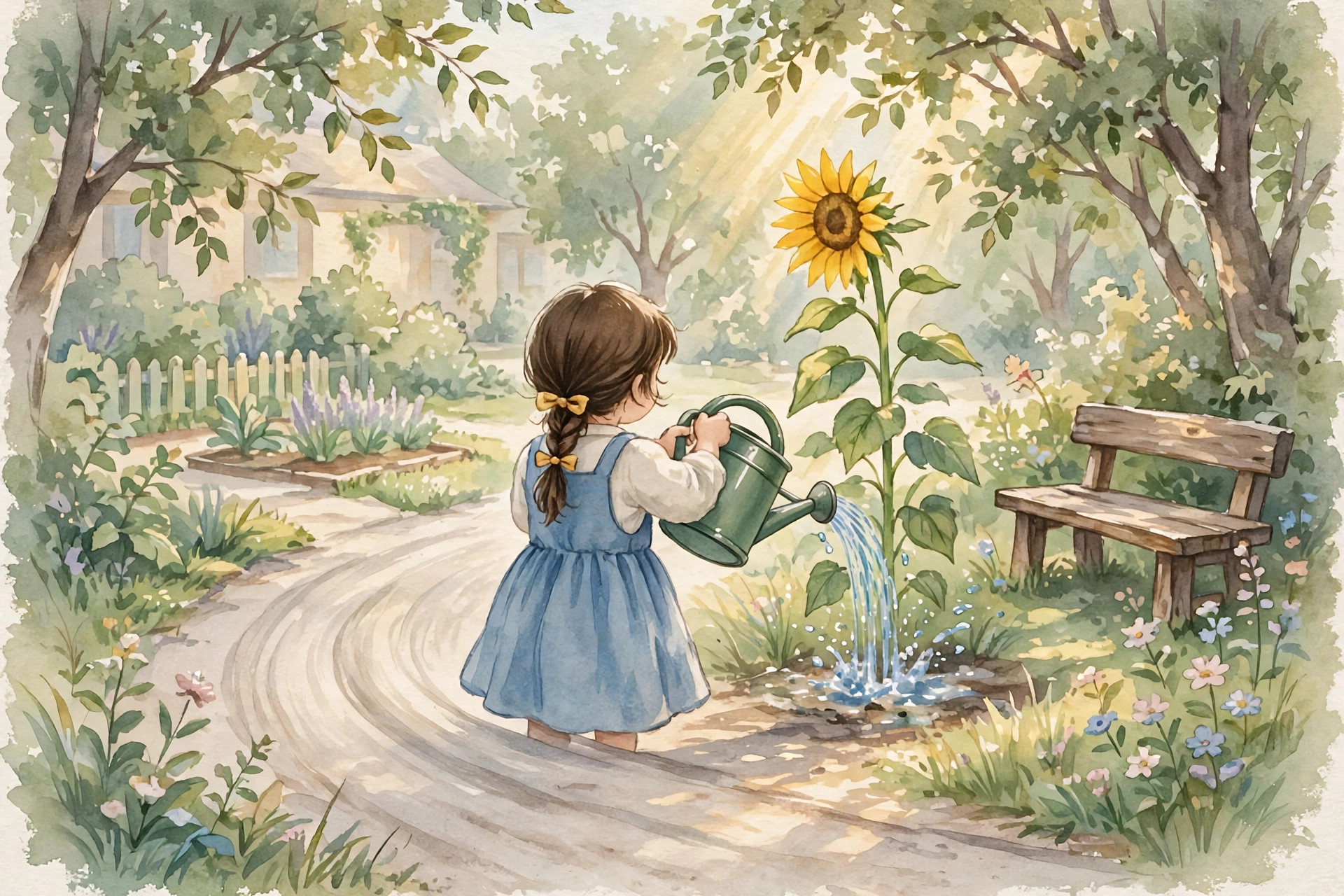
At break time Zara ran out to play hopscotch with her friends, and the torn bag was soon forgotten in the happy noise of the playground. When she came back inside, warm and a little out of breath, she stopped at her desk and stared. There sat her red bag, and the strap was mended, neatly and strongly, with bright blue thread, and beside the mend someone had stitched a tiny blue star, just like the yellow one on the pocket. Miss Farah smiled from her desk and said, Someone kind fixed it while you played. Zara looked around the classroom, wondering who it could have been. Then, through the window, she saw Chacha Imran outside, watering the tall sunflower by the classroom door and humming a soft tune to himself. Her heart gave a little jump. It was him. He had noticed her torn strap, he had quietly mended it with his own hands, and he had asked for nothing in return, not even a thank you.
All afternoon, Zara kept thinking about the mended strap and the tiny blue star. Nobody had told her to say thank you, and her mother had not reminded her, because her mother did not even know yet. The words simply grew in her own heart, like a sunflower growing toward the sun, until she could not keep them inside any longer. As soon as she reached home, she spread her crayons across the kitchen table and drew her very best picture: a red bag with a yellow star, a tall sunflower, and a big green watering can, and underneath, in her neatest letters, she wrote, Thank you, Chacha Imran. She folded the card carefully, put it in her bag, and went to bed early, because she could not wait for morning to come.
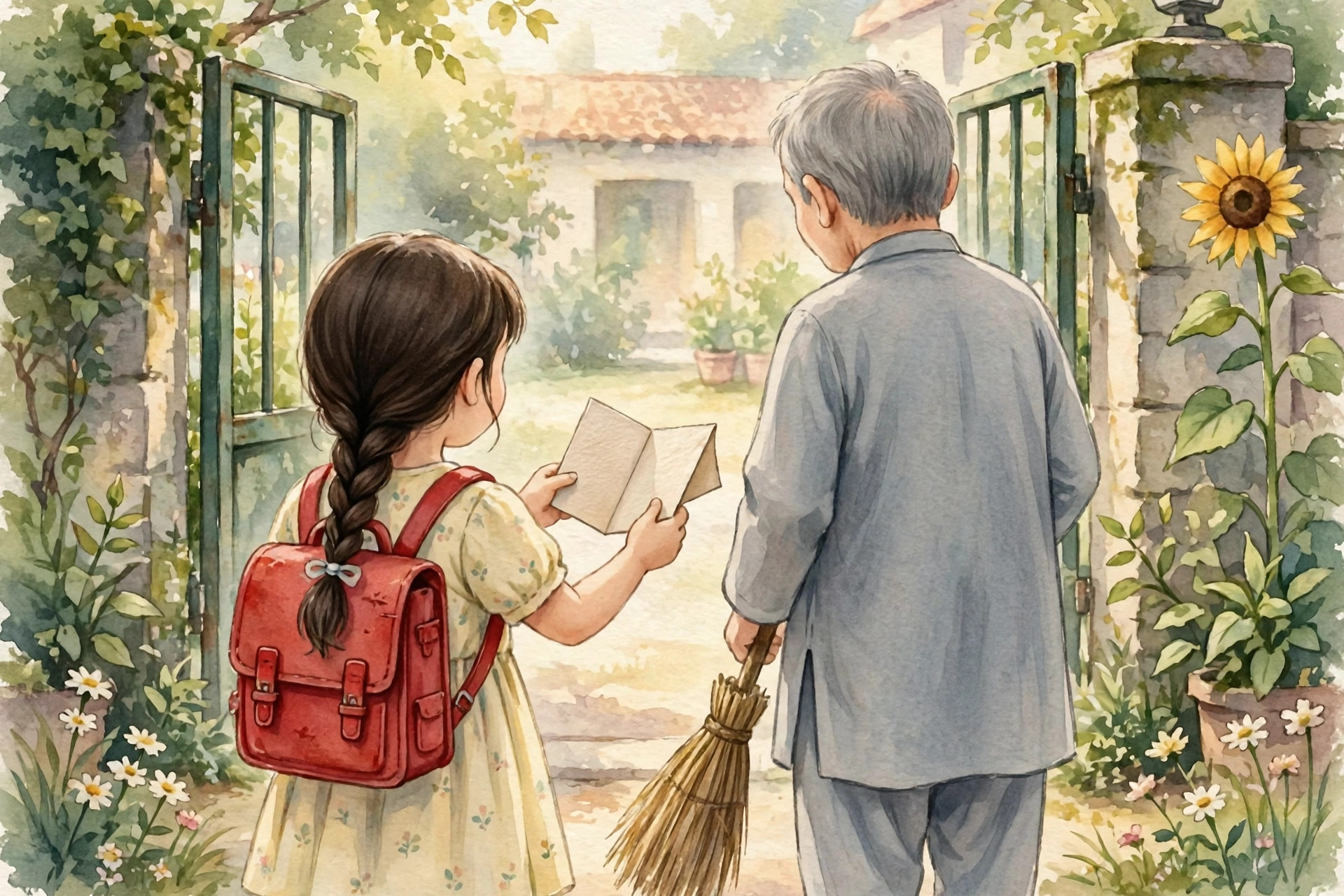
The next morning Zara walked to school early, and there was Chacha Imran at the gate, sweeping the fallen leaves into a neat pile, just as he did every morning. Zara took a deep breath, walked up to him, held out the card with both hands, and said in a clear, brave voice, Thank you for mending my bag, Chacha Imran. You are very kind. The old caretaker stopped sweeping, and his face lit up like the morning sun. He thanked her warmly, read the card twice, and pinned it on the wall of his little room beside the school gate, where he could see it every day. From that day on, Zara began to notice all the quiet kind things around her: the swept yard, the watered plants, the gate opened early on rainy days, and she thanked people for them without waiting to be told. Each thank you made the other person smile, and each smile made Zara's own heart feel lighter and happier, like a balloon floating gently up into a blue sky.
Lesson for today: When someone does something kind for you, notice it and say thank you yourself, without waiting for a grown-up to remind you. A thank you that comes from your own heart is the sweetest kind of all, and it makes both people happy.
Question: Who did something kind for you this week without making a big show of it, and what words could you use to thank them all by yourself?
Try it tonight - a tiny family challenge: Think of one kind thing someone did for you today, a teacher, a neighbour, a bus driver, or someone at home. Draw them a small thank-you picture or write them a short note in your own words, and give it to them tomorrow without anyone reminding you. Then tell your family how it felt to say thank you first, and how the other person's face changed when they heard it.
For parents - reading this story together: Read the mended-bag scene slowly, and pause before Zara speaks at the gate, so your child can guess what she will say. Then try these three questions: Why was Chacha Imran's help special even though he did not ask for thanks? How did Zara know it was him? What quiet kind things happen in our home that nobody says thank you for? As a small activity, start a family thank-you jar: each evening, everyone writes one thank you on a slip of paper and drops it in, and on Friday, read them aloud together.
Q: My child only says thank you when I remind them. How can this story help? A: Use Zara's example to show that a thank you feels best when it comes from your own heart, not from a reminder. After reading, ask your child to spot one kind thing someone did today, and let them choose the words themselves. Praise the noticing, not just the politeness, and the habit will slowly grow on its own.
Q: What if my child is too shy to thank someone face to face? A: A shy child can still say thank you in their own way, and every way counts. A drawn picture, a short note, or a smile with a quiet thank you all carry the same kindness. Let your child choose the way that feels brave enough, practise the words together at home first, and never force a loud thank you.
Q: Should I reward my child for saying thank you? A: A warm smile and a kind word back are the best reward, because they teach that gratitude itself is the joy. Small treats now and then do no harm, but if every thank you earns a sweet, the child may thank people only for the prize. Let the other person's happy face be the reward your child learns to love.
Q: How do I help my child notice quiet kindness, like Chacha Imran's? A: Point out quiet kindness when you see it, in a warm, simple way: the driver who waited, the neighbour who held the door, the cook who made lunch. Children copy what grown-ups notice, so when you say thank you aloud for small things, your child starts spotting them too, and soon the noticing becomes their own habit.
Q: How long should a read-aloud session for this story be? A: About five to seven minutes, with pauses for the story questions and time to look at the pictures. That length suits ages five to nine well: long enough for the lesson to land, short enough to hold attention. If your child wants more, reread the school-gate scene, or start the thank-you jar together that same evening.
Source note: This story is original fiction, based on the Islamic teaching of gratitude and thankfulness, including thanking people for their kindness, since gratitude to people is part of gratitude to Allah (meaning in our own words). No verse is quoted, and no character or event is based on a real person.
Based on the Islamic teaching of gratitude, including thanking people for their kindness (meaning in our own words); story is original fiction.