Islamic Story for Kids About Waiting Your Turn: The Playground Line
Waiting for your turn is not about standing still and feeling bored. It is about being fair to the people who came before you, and trusting that your turn will come too. This is the story of Hamza, a long line for a red slide, and the afternoon he learned that waiting can feel good.
In this story you will meet Hamza at the playground, see the long line for the red slide, watch what happens when he almost pushes ahead, learn the little waiting trick his father taught him, and find out why the snack at the end tasted even better than the slide.
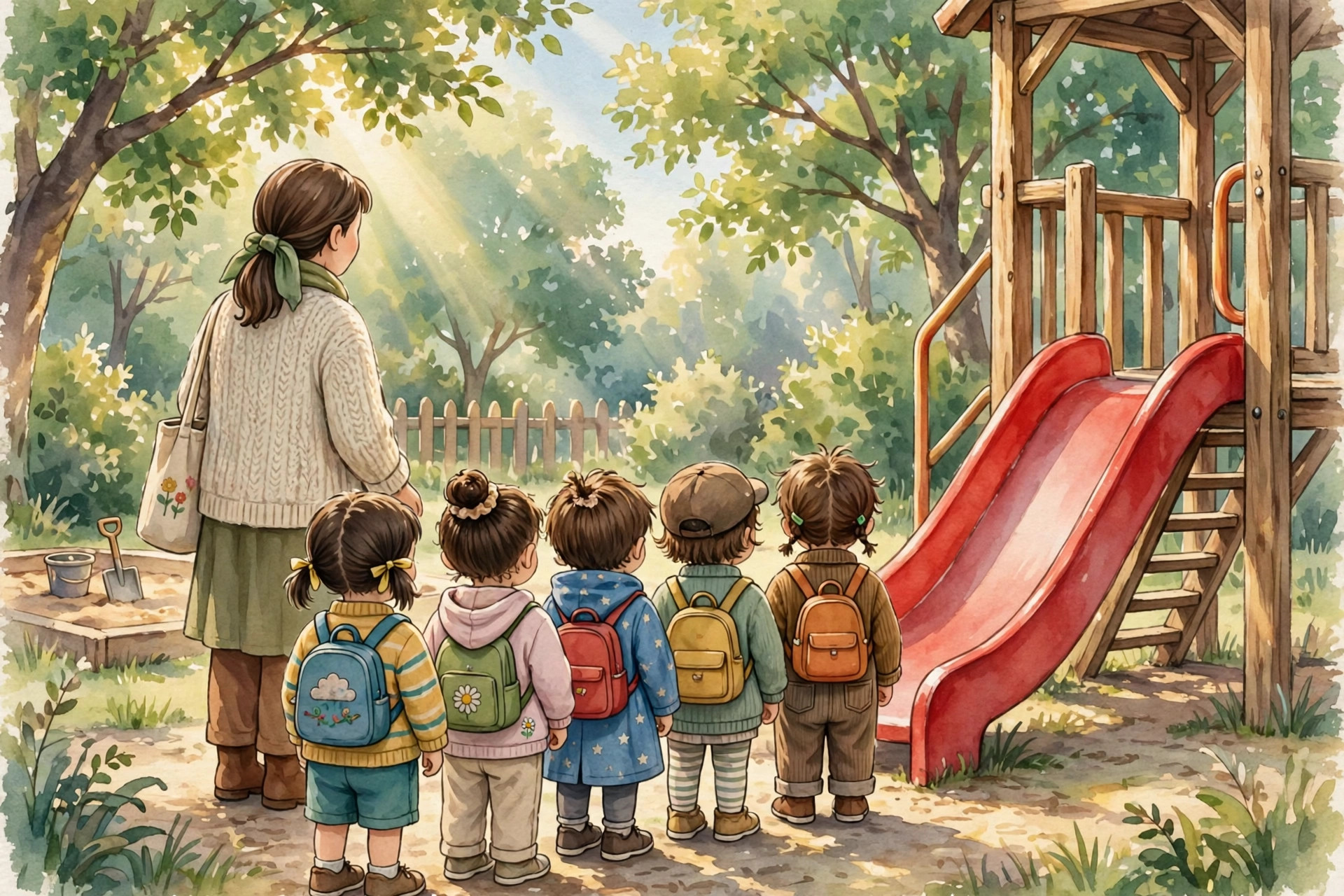
On Saturday morning, Hamza ran to the playground with his father, his shoes squeaking on the path. The red slide stood tall and shiny in the sun, and Hamza wanted it more than anything. But when he reached the steps, his heart sank a little. Five children were already waiting in a line, laughing and chatting, and the slide was busy, busy, busy. Hamza's feet wanted to run straight to the front. His hands wanted to climb the steps right now. He opened his mouth to say, Me first, and then he remembered what his father always said at home: A line is a promise we make to each other. First comes first, and everyone gets a turn. His father sat on the nearby bench with a smile and gave him a small thumbs up, which made the waiting feel a little easier already, because Hamza knew he was not waiting alone.
So Hamza joined the back of the line, even though waiting felt like a very long time. He counted the children ahead of him, one, two, three, four, five, and he watched each one slide down with a happy shout. When a little girl at the front took a little longer to climb, because her shoes were new and slippery, Hamza did not groan. He waited, and he said, Take your time, in a kind voice, just like his father did when Hamza himself was slow. And do you know what happened? The waiting did not feel so long after all, because watching the others enjoy their turns was almost like a game of its own, and when Hamza's own turn finally came, the slide felt faster and happier than if he had pushed ahead and spoiled it for everyone. He waved to the children behind him as he climbed, and they waved back, because a line where everyone waits kindly feels like a team, not a race.
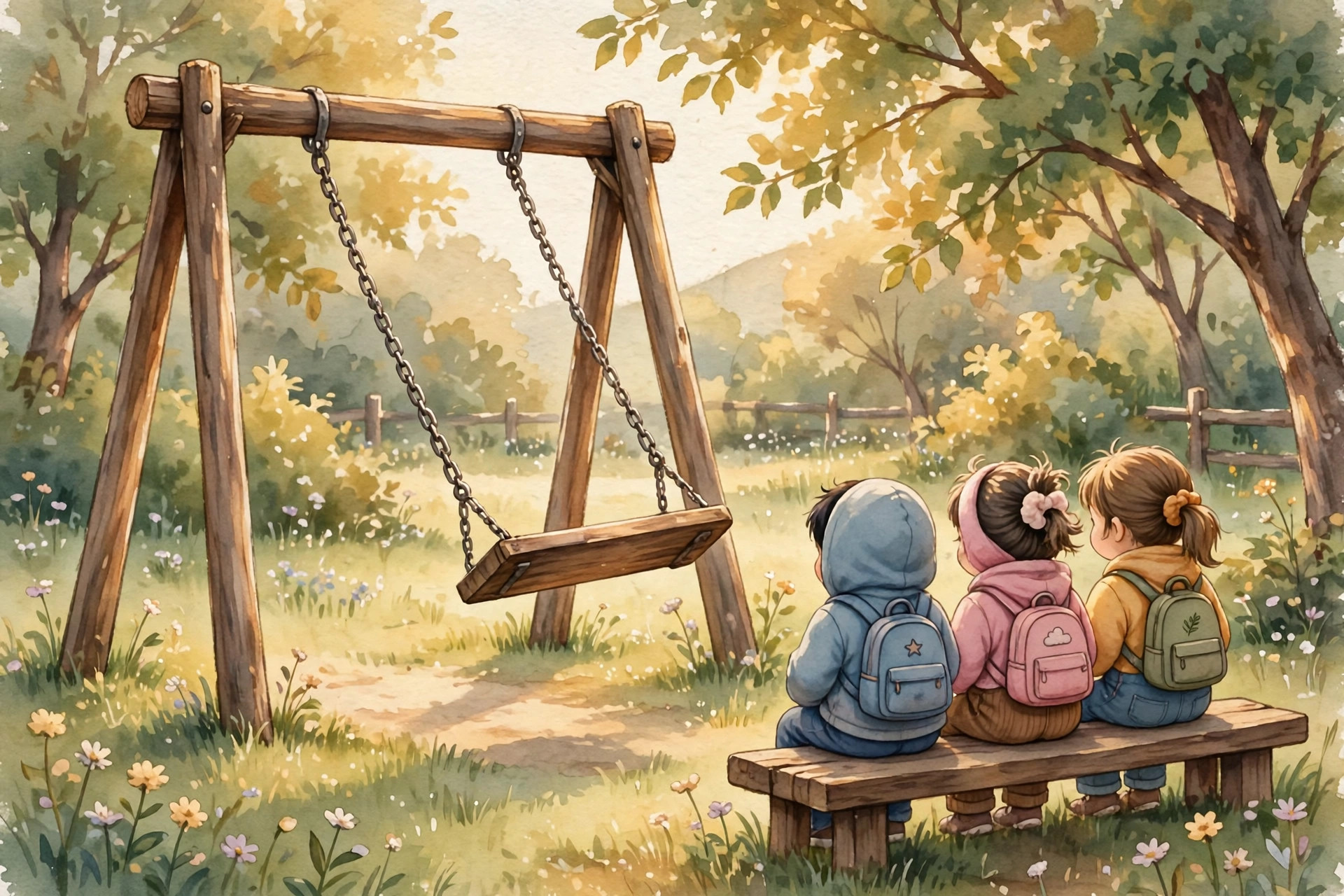
After the slide, Hamza wanted the swing, and again there was a wait. Two children were swinging already, and a small boy sat on the bench, waiting just like Hamza. This time Hamza did something clever. He sat beside the boy and counted slowly to ten, then to twenty, breathing in and out, the way his father had taught him when waiting felt hard. By the time he reached twenty, one swing was free, and the boy beside him got the other one, and they swung side by side, laughing, neither of them having pushed or argued. Hamza learned something important that afternoon: a turn you wait for is a turn you enjoy properly, because your heart is calm and ready for it, not rushed and cross. The boy beside him smiled when their swings moved together, and Hamza realised that waiting side by side had already made a new friend, before the swinging even began.
At snack time, Hamza's father opened a box of orange slices and small bottles of water. Hamza was thirsty and hungry, and he wanted two slices at once. But he looked at the other children, and he waited again, taking one slice first, and passing the box along. When everyone had one, there was still enough for seconds, and Hamza's second slice tasted sweeter than the first, because nobody had been left out. On the walk home, Hamza told his father, Waiting was hard at first, but then it felt good. His father smiled and said, That good feeling is what fairness feels like, Hamza. When you wait your turn, you give everyone, including yourself, a happy afternoon. Hamza helped his father pack the empty box away, and as they walked home he kept thinking how there had been enough for everyone, simply because everyone had waited.

Lesson for today: Waiting your turn means joining the back of the line, letting others enjoy their turn, and trusting that your turn will come. When you wait kindly, without pushing or groaning, playtime stays happy for everyone, and your own turn feels even better.
Question: At the playground, at school, or at home, where is waiting your turn hardest for you, and what could you do while you wait, count, breathe, or cheer for the person ahead of you?
Try it tonight - a tiny family challenge: Play a waiting game at home. Take turns with one favourite toy, and count slowly to ten before each turn changes. The person waiting gets to be the cheerleader, clapping and saying, Your turn, well done. After three rounds, talk about it together: did waiting feel easier when someone cheered for you? That is the secret of a good line: everyone waits, everyone cheers, and everyone gets a turn.
For parents - reading this story together: Read the slide scene slowly, and pause before Hamza joins the line, so your child can guess what he will do. Then try these three questions: Why do you think pushing ahead would have spoiled the fun for everyone? How did counting and cheering help Hamza while he waited? What does a fair line feel like in your heart? As a small activity, practise a real line at home with a snack or a toy, and praise the waiting itself, not just the turn, because children learn patience when waiting earns a warm word, not only a reward at the end.
Q: My child hates waiting in lines and often pushes ahead. How can this story help? A: Use the story as a rehearsal, not a lecture. Read it before a park visit, practise counting at home with a toy, and praise calm waiting itself. If pushing happens, stay calm, return to the back together, and name it: waiting is hard, and you still did the fair thing.
Q: At what age can children understand taking turns properly? A: Most children begin to grasp turn-taking between ages three and five, but waiting calmly in a long line is still hard at six or seven, and that is normal. Keep lines short at first, use counting to ten, and build up gradually. Every calm wait is a small success worth noticing aloud.
Q: Should I reward my child for waiting, or is praise enough? A: Warm, specific praise usually works best: you waited so kindly, and everyone enjoyed their turn. A small reward now and then is fine, but avoid making every wait a bargain for a treat, or the child learns to wait only for a prize. The story's own reward is the happier playtime, and naming that feeling helps it stick.
Q: What if other children push ahead of my child in the line? A: Teach a calm sentence, such as, We were in line, please join the back, said in a steady voice, and stay nearby for support. If pushing continues, move to another activity together rather than arguing, and talk later. An unfair line does not have to end in a fight.
Q: How long should a read-aloud session for this story be? A: About four to six minutes at a gentle pace, with pauses for the questions in the story. That length suits ages five to nine well: long enough for the lesson to land, short enough to hold attention. If your child wants more, reread the slide scene, or act out the line with toys, rather than rushing on to another story.
Source note: This story is original fiction, based on the Islamic teaching of fairness, patience, and kindness to others, including giving others their due turn (meaning in our own words).
Based on the Islamic teaching of fairness, patience, and kindness to others (meaning in our own words); story is original fiction.