Islamic Story About Keeping a Promise When It Costs You: The Carpenter's Roof

A promise is easy to make when it costs nothing. It becomes a test of character only when keeping it costs you something real: money you needed, a chance you wanted, or a comfortable week you had planned. This is the story of Imran, a carpenter, a leaking roof, and the week he learned that a promise kept at a cost is worth more than a promise kept only when it is convenient.
In this story you will meet Imran and his elderly neighbour, see the small promise he made about her leaking roof, watch the much bigger job offer that arrived the same week, follow the difficult night when he had to choose, and discover what happened when the rain finally came.
Imran was a carpenter in a small town, known for two things: his work was solid, and his word was solid too. He did not have a big workshop or many workers. He had his tools, his old van, and a notebook in which he wrote every job, every price, and every date he had promised. One autumn morning, his elderly neighbour, Aunty Fatima, knocked on his door with a worried face. The roof over her back room had started to leak, she said, and the rainy season was only a few weeks away. She lived alone, her children lived far away, and she was afraid that the damp would spread through the winter. Imran climbed up, looked at the roof, and saw what needed doing: three days of work, some new timber, and a careful seal around the chimney. He gave her a small, fair price, and he promised, in plain words, I will finish your roof before the rains come. Aunty Fatima thanked him with tears in her eyes, and Imran wrote the job in his notebook, with the date circled twice.
Two days later, a wealthy merchant from the next town came to Imran's workshop with a much bigger offer. He was opening a new shop and needed all the shelves, counters, and doors fitted within ten days, and he was willing to pay three times what Imran would earn from Aunty Fatima's roof. There was only one condition: Imran had to start at once, and work only on the shop until it was done. If he waited, the merchant said, he would hire someone else. Imran felt his heart beat faster. Three times the money would pay off a debt, buy new tools, and give his family an easy month. He looked at the merchant's offer, and then he looked at his notebook, where Aunty Fatima's roof was written in his own handwriting, with the date circled twice. The merchant's money was real, and the choice was not easy, because a promise to a poor old neighbour does not shout as loudly as a rich man's offer, but it speaks just as clearly to the conscience.
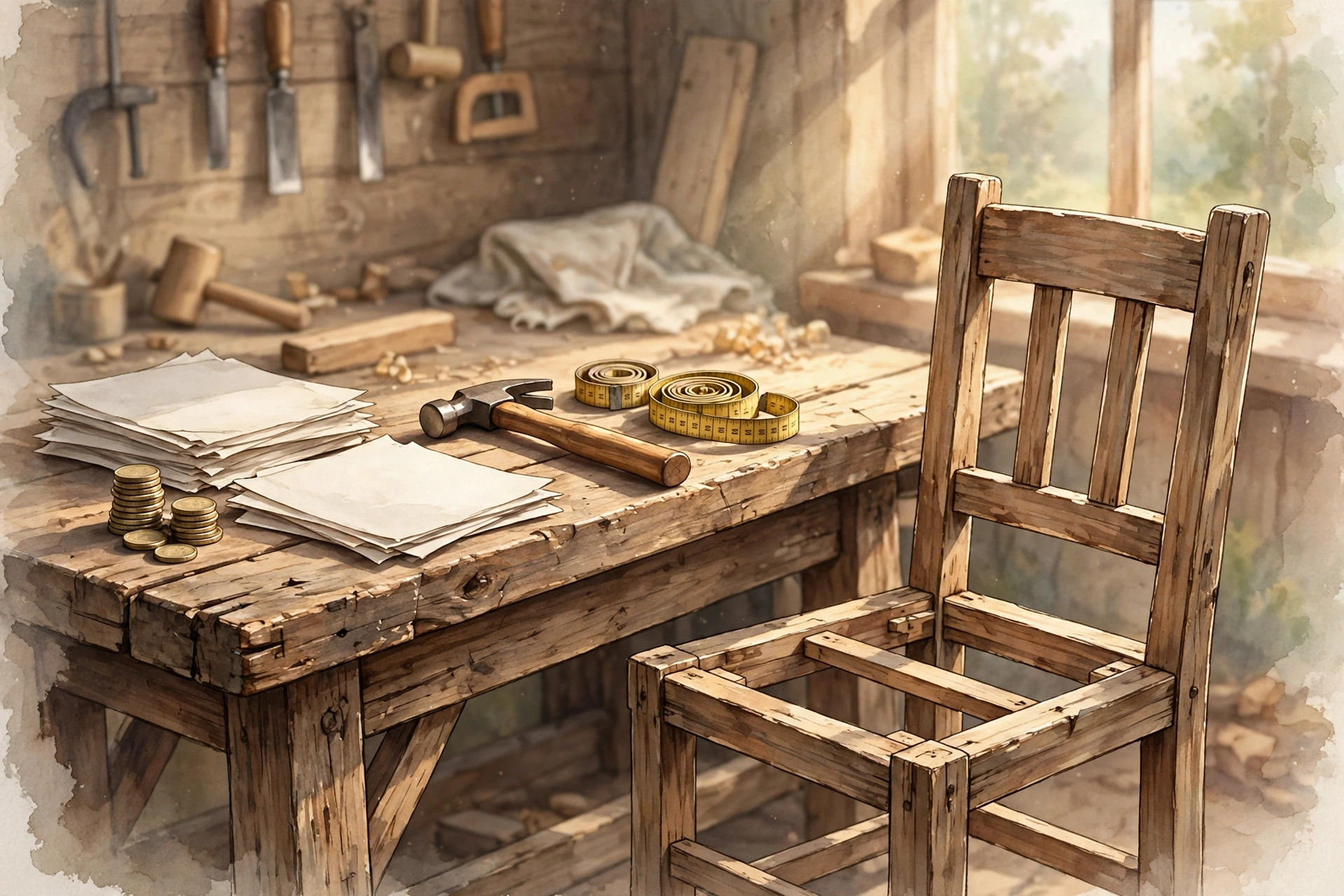
That night, Imran sat with his wife and talked it through honestly. He did not pretend the money did not matter. It mattered a great deal. But his wife asked him a simple question: If the rains come while Aunty Fatima's roof is still leaking, and she sits alone in a damp room, will the extra money feel good then? Imran knew the answer at once. He also thought about what kind of man he wanted to be, and what his own children would learn if they watched him break a promise to a lonely old woman for a bigger job. He decided to keep his promise, and the next morning he went to the merchant and said, respectfully and plainly, I am grateful for your offer, but I have already promised another job, and I cannot break it. I can start your shop the week after, if you can wait. The merchant frowned, said he could not wait, and left. Imran watched him go, and felt the loss like a door closing, but he also felt something else: a quiet steadiness, as if his own word had held him up.
The next three days were hard, honest work. Imran climbed the roof in the autumn sun, pulled out the rotted timber, fitted new beams, and sealed the chimney with care, even though nobody would ever see that part of the job. Aunty Fatima brought him tea and bread at lunchtime, and in the evenings she sat in her garden, watching the roof take shape, and praying quietly for the man who had kept his word. On the third evening, as the sun went down, Imran packed his tools and said, Your roof is ready, Aunty, before the rains. She held his hand and said, You kept your promise, my son, and that is worth more than gold. Imran went home tired, with sore hands and less money than the merchant would have paid him, but he slept well that night, because a man who keeps his word sleeps better than a man who counts money he earned by breaking it.
Two weeks later, the rains came, hard and long, and they tested every roof in the street. Water ran down the lanes, and several houses leaked, but Aunty Fatima's back room stayed dry. She told everyone who visited about the carpenter who had kept his promise, and slowly, quietly, something began to happen. A neighbour asked Imran to fix a door. A shopkeeper asked him to build a counter. A teacher asked him to repair the school's broken benches. None of these jobs paid like the merchant's shop, but together they filled his month, and they came to him for one reason: people had heard that Imran kept his word, even when it cost him. The merchant, too, heard about it, and months later, when he needed a careful carpenter for a smaller job, he came back to Imran, because he had learned that a man who keeps a small promise to a poor neighbour will keep a big promise to a rich merchant as well.

What did the promise actually cost Imran, and what did it buy him? The cost was real, and this story does not pretend otherwise. He lost a large, well-paid job, he had a tight month, and he had to tell his family that the easy money was gone. A promise kept at a cost always has a price, and anyone who tells you otherwise has never kept a hard promise. But the price bought something money cannot buy at once: a reputation that travels from house to house, a clear conscience, and the trust of people who will call him again, not because he is the cheapest, but because he is the most reliable. Trust is slow to build and quick to lose, and every promise kept, especially a costly one, is a brick in that building, while every promise broken for money is a brick pulled out.
Before you make a promise, use three simple tests, and they will save you from many painful choices later. First, the calendar test: do you actually have the time, or are you promising from enthusiasm and hoping the days will stretch? Second, the cost test: if keeping this promise becomes hard, or another offer arrives, will you still keep it, or were you only promising while it was easy? Third, the honesty test: have you promised clearly, with a date and a price, or vaguely, so that you can later pretend you meant something else? A promise that passes all three tests is a promise you can keep with a steady heart. A promise that fails one of them should be made smaller, or made later, or not made at all, because a small promise kept is worth far more than a grand promise broken.
There is also an important boundary, and it should be named plainly. Sometimes a promise genuinely cannot be kept: illness strikes, a family emergency arrives, or the work turns out to be impossible in the way first planned. In that case, the honest course is not to disappear, and not to break the promise silently. It is to go to the person at once, explain what has changed, apologise sincerely, and offer a new plan, a new date, or help finding someone else. That is very different from breaking a promise for a better offer, because the first is a hardship honestly shared, while the second is a choice to value money over your word. Imran's story is about the second kind of choice, and he chose his word, even though it cost him, because he understood that a promise is not a price tag that can be replaced by a higher one.
There are common mistakes that turn good intentions into broken promises, and they are worth naming. The first is promising too quickly, saying yes before checking the calendar, because you want to please someone in the moment. The second is promising vaguely, with no date and no detail, so that both sides remember a different promise later. The third is keeping a promise resentfully, doing the work with a bitter heart and reminding everyone what it cost you, which spoils the very trust the promise was meant to build. The fourth is breaking a small promise because it feels small, forgetting that to the person waiting, especially an elderly neighbour alone in a leaking house, no promise is small. And the fifth is treating a promise as a bargain that can be bought out, as if a bigger offer cancels an earlier word. All five mistakes share one root: forgetting that a promise is not about the job, but about the person who trusted you.
Daily-life application: (1) This week, look at one promise you have made, at home, at work, or to a friend, and check it against the three tests: time, cost, and clarity. (2) If you have promised something you cannot do, go to the person today, explain honestly, and agree a new plan, rather than waiting for them to discover it. (3) If a better offer arrives while you are committed, pause before answering, and ask yourself what your word is worth to you, not only what the offer is worth in money. (4) Keep a small notebook, like Imran's, for promises and dates, because a written promise is harder to forget and easier to honour. (5) And when someone keeps a costly promise to you, thank them properly, because gratitude is what makes keeping promises feel worthwhile, for them and for everyone watching.
Lesson: Keeping a promise when it costs you means honouring your word even when a better offer arrives, because trust is built by costly faithfulness, not by convenient faithfulness. A small promise kept to a lonely neighbour can be worth more than a large job gained by breaking it, since people remember who kept their word when it was hard.
Discussion question: Have you ever kept a promise that cost you something, or broken one for a better offer? What did it cost you, what did it teach you, and what would you do differently if the same choice came again?
Q: Does keeping a promise mean I can never change my plans, even in a real emergency? A: No, and this story does not teach that. A genuine emergency, illness, or a job that turns out to be impossible is different from a better offer. In that case, go to the person at once, explain honestly, apologise sincerely, and agree a new date or a new plan. What breaks trust is not changing a plan for a real reason, but disappearing silently or swapping a promise for money without telling the person who trusted you.
Q: What if I promised something too quickly and now realise I cannot do it well? A: Tell the person early, before they are depending on you, and be specific about what has changed. Offer what you can do instead: a smaller job, a later date, or help finding someone reliable. Most people forgive an honest early correction, especially when it comes with a real alternative, but they rarely forgive discovering, too late, that a promise was never going to be kept.
Q: Is it wrong to accept a better offer after I have already promised someone else? A: Accepting a better offer while you are already committed, without the first person's agreement, breaks the trust that the promise created, even if the new job is legal and well paid. The honest course is to finish what you promised first, or to ask the first person, openly, whether they would release you, and accept their answer. A reputation for keeping your word is worth more, over a lifetime, than any single job.
Q: How can I teach my children to keep promises when it costs them? A: Start with small, visible promises at home: a game at a promised time, a chore done as agreed, a story read as promised, even when you are tired. When keeping a promise costs you something, name it calmly: this was hard, and I kept it because my word matters. Children learn far more from watching a parent keep a costly promise than from hearing a hundred lectures about honesty.
Q: What if someone keeps breaking promises to me? Should I keep trusting them? A: Forgiveness does not require unlimited trust. After a broken promise, have a calm conversation about what happened and what you need next time, and watch whether their behaviour changes. For important matters, put the agreement in writing, with a date, and keep your expectations realistic. Trust can be rebuilt, but it is rebuilt by kept promises over time, not by words alone, and you are wise to protect yourself meanwhile.
Source note: This story is original fiction written to illustrate the Islamic teaching that promises and trusts must be honoured, including keeping agreements and fulfilling what one has undertaken (meanings in our own words, with reference to the general teaching on fulfilling promises in the Qur'an, 17:34 and 23:8). The characters and events are invented, and questions about contracts or disputes should be put to a trusted local scholar or a proper local channel, since guidance and local practice differ on details.
Based on the Islamic teaching that promises and trusts must be honoured (meanings in our own words, Qur'an 17:34 and 23:8); story is original fiction.