Islamic Story About Patience in Illness: The Slow Road Back
Patience in illness is not the patience of waiting for a bus or standing in a queue. It is the patience of a body that will not hurry, of days that all look the same, of needing help for the smallest things, and of not knowing exactly when you will feel like yourself again. This is the story of Salma, a schoolteacher whose back gave way one ordinary morning, and who discovered, slowly and unwillingly at first, that healing has its own timetable, and that the waiting itself can teach you something no fast recovery ever could.
In this story you will meet Salma on the morning her back gave way, sit with her through the long weeks of recovery at home, watch her struggle with depending on her daughter, follow her first careful steps with the physiotherapist, and see how a small notebook, a window seat, and a few honest prayers changed the way she understood patience.
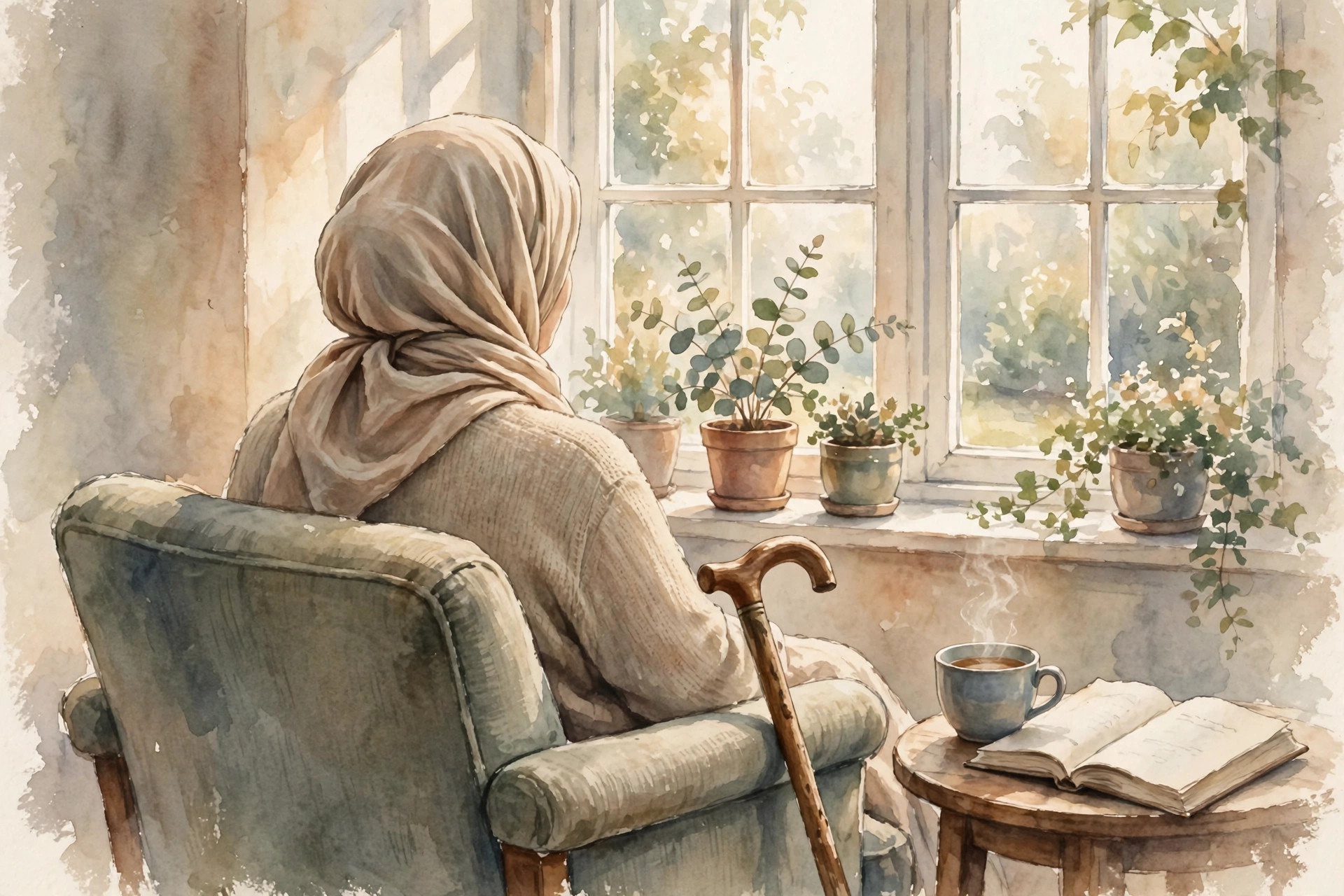
Imagine a woman, call her Salma, forty-four years old, a primary-school teacher in a busy town school, the kind of teacher who arrived early, carried her own stack of exercise books, and never sat down during a lesson. She walked quickly between classrooms, she bent down to tie a child's shoelace without thinking, and she lifted the heavy water jug in the staff room with one hand. She had never been seriously ill in her life, and she thought of her body the way a careful driver thinks of a reliable car: it would simply keep going, because it always had. One Tuesday morning, as she bent to pick up a fallen pencil box in her classroom, something in her lower back gave a sharp, hot twinge, and then a deeper pain spread down her leg like a slow tide. She tried to stand straight, and she could not. A colleague helped her to a chair, the school called her husband, and by evening a doctor was telling her words she did not want to hear: a slipped disc, an operation, and then months of recovery, not days. Salma nodded politely, and inside she was already counting: how many weeks until she could stand, how many days until she could walk to school, how soon she could be herself again, because her whole life had been built on moving fast and managing alone.
The operation went well, the doctors said, but the recovery did not feel like a recovery at all. The first week at home, Salma could barely sit up without help, and she needed her daughter Hira, who was nineteen, to bring her water, to help her to the bathroom, and to lift the blanket when it slipped. Salma hated every minute of it. She was the mother, the one who helped, and now she was the one who needed helping, and the shame of it stung more than the pain in her back. She snapped at Hira once, for bringing the tea too slowly, and then she cried, quietly, into her pillow, because she knew the girl had done nothing wrong. Her husband, Tariq, took leave from work and learned to cook the simple meals, badly at first, and then a little better, and Salma lay in bed listening to the clatter of pots and feeling useless, counting the days on the calendar like a prisoner counting the bars. Every morning she asked the same question, to herself and to the doctor on the phone: when will I be normal again, and every answer was the same gentle refusal: healing does not work to a calendar, and your back will tell you when it is ready, not the other way around.
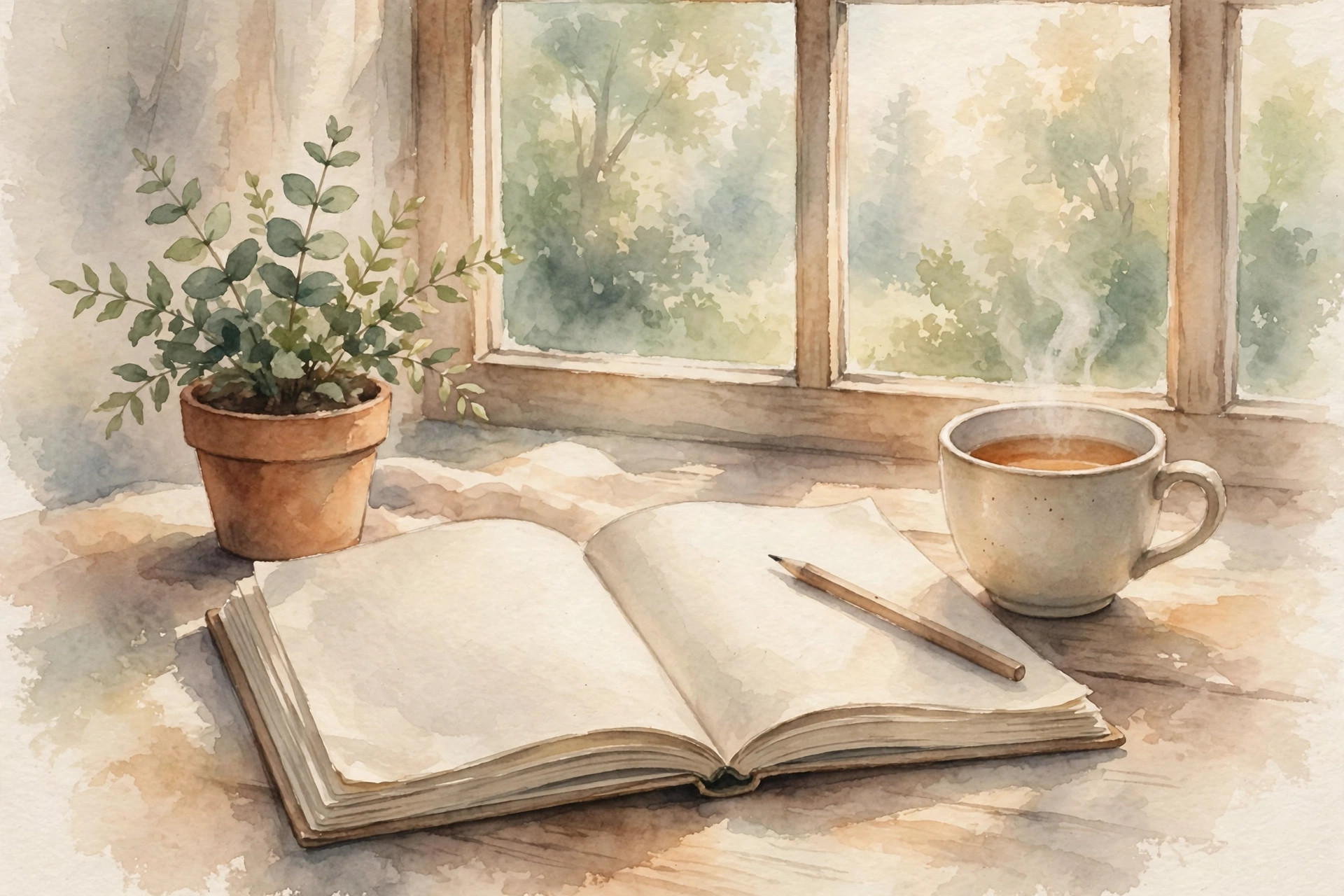
In the third week, the physiotherapist came to the house, a calm woman named Dr. Sana, who carried a small bag and spoke in a voice that made rushing feel foolish. She did not ask Salma to walk, or to bend, or to be brave. She asked her to lie still and breathe, to tighten one small muscle and release it, to lift one foot two inches off the bed and hold it for five slow seconds. Salma tried, and she failed, and she tried again, and the tiny movement that a child could do without thinking left her sweating and exhausted. Dr. Sana smiled and said something Salma never forgot: You are not behind, Salma. You are exactly where a healing back is supposed to be. Then she gave her a small notebook and told her to write down one thing each day that her body could do today that it could not do yesterday, even if it was only sitting up for five minutes longer, or sleeping through the night without waking in pain. Salma thought the notebook was a silly idea, but she kept it beside her bed anyway, and that evening she wrote her first line: Today I sat by the window for ten minutes. It was a small sentence, but it was the first time in weeks that she had written about what was getting better, instead of only counting what was still wrong.
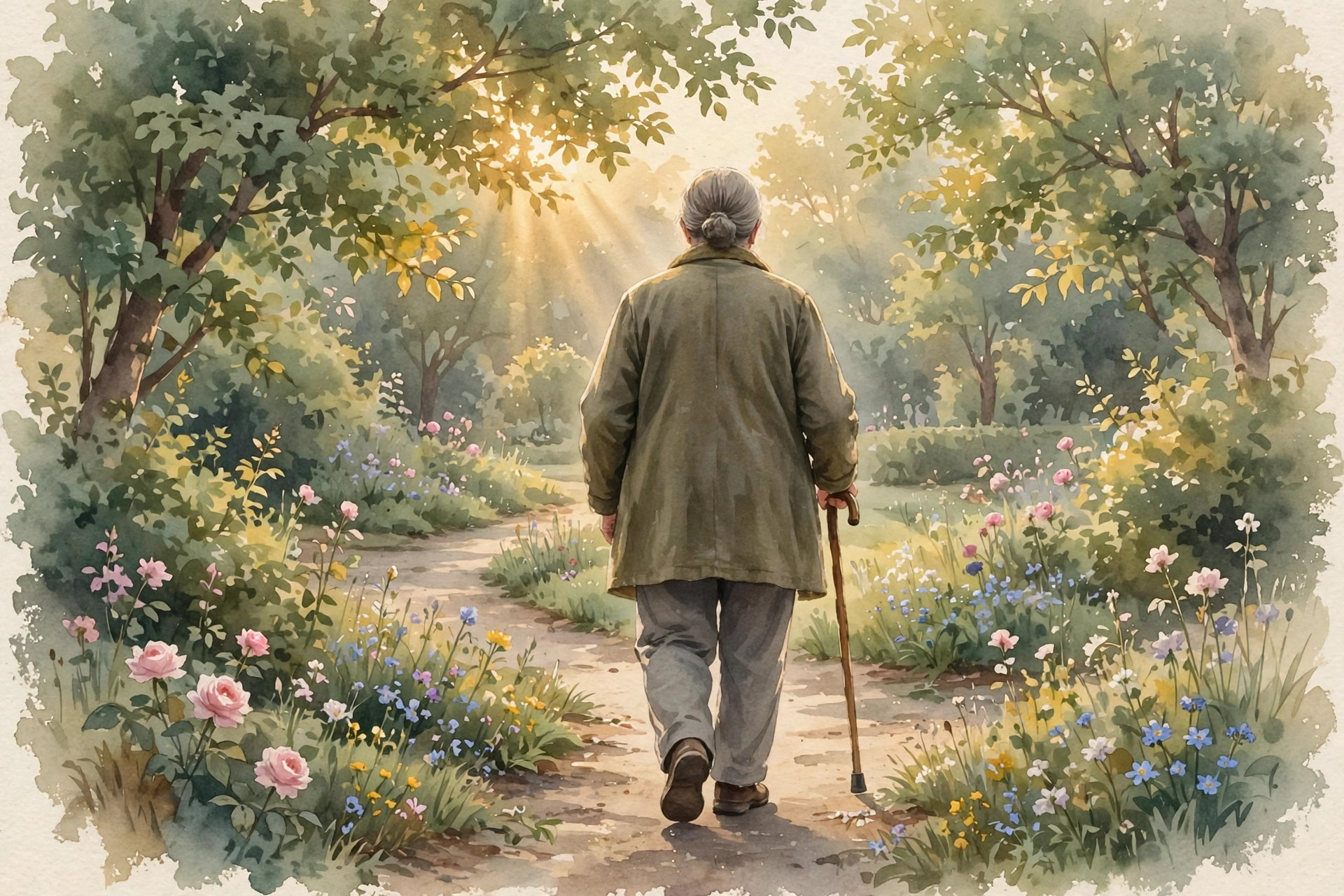
The weeks passed slowly, the way recovery always passes, one careful day at a time. Salma learned to walk to the gate with a stick, then to the end of the street, then around the small park, always slowly, always stopping when her back warned her, and always writing it down in the notebook. She learned to accept help without apologising for it every time, and she learned that Hira did not mind helping, and that Tariq's clumsy cooking was his way of saying he loved her. She started to pray with a different kind of attention, not the hurried prayer of a busy teacher squeezed between lessons, but a slow, honest prayer in which she asked for strength for one day only, not for the whole recovery at once. One morning, about two months after the operation, she walked to the park without the stick, sat on the bench under the big tree, and watched the children going to school with their bags bouncing on their backs. She did not cry, and she did not feel sorry for herself. She felt something quieter and stronger: gratitude, not for being fully well, because she was not, but for the slow road itself, which had taught her to wait without bitterness, to depend on others without shame, and to trust that healing, like a seed under the soil, grows even on the days when nothing can be seen above the ground.
What does patience in illness really mean? It is not simply enduring pain with a brave face, and it is not pretending that being ill is easy, because it is not. Patience in illness means three things, and they are all harder than they sound. First, it means accepting the pace of healing: the body recovers in its own time, and no amount of worry, comparison, or impatience will make a wound close faster, just as no amount of pulling will make a plant grow faster. Second, it means accepting dependence: allowing others to help, to cook, to carry, to wait with you, without turning that help into a debt you must repay or a shame you must hide, because accepting help gracefully is itself a form of patience. Third, it means living the day you have, not the day you wish you had: doing the small exercise today, eating the meal today, praying the prayer today, instead of spending the whole day rehearsing a future in which you are already well. A patient person in illness is not someone who never feels frustrated, sad, or afraid. They feel all of those things, and then they choose, again and again, to do the next small right thing anyway, and that choice, repeated daily, is what patience actually looks like.
There is a well-known Islamic teaching that patience in hardship carries a great reward, and that those who bear their trials with patience are given a reward beyond measure, and that Allah is with those who are patient. Salma's story is a picture of that teaching, told in ordinary words. The reward is not promised because suffering is pleasant, or because illness is a sign that a person is specially loved, and it is certainly not promised because a sick person should never seek treatment or ask for help. The teaching means something simpler and deeper: that the waiting, the depending, the slow days, and the quiet endurance are not wasted time, and that a person who bears them with trust, without cursing their fate and without giving up on the treatment, is doing something valuable, even while lying in bed doing nothing at all. It also means that patience and treatment go together: Salma took her medicine, she did her exercises, she followed the doctor's advice, and her patience was shown in how she followed that treatment faithfully, day after day, without demanding that it work faster than it could. Patience, in this teaching, is not passivity. It is active trust: doing what you can, and leaving what you cannot do to the One who heals.
Small daily habits during recovery: (1) Keep a healing notebook, like Salma's, and write down one small improvement each evening, even if it is only five minutes more of sitting, one more step walked, or one night slept better, because the notebook turns invisible progress into something you can see, and seeing progress keeps hope alive. (2) Do the prescribed exercises exactly as the doctor or physiotherapist taught them, at the same time each day, even when they feel too small to matter, because healing is built from tiny movements repeated faithfully, not from one heroic effort. (3) Accept one offer of help each day without apologising for it, and say thank you plainly, because accepting help keeps your family close and stops the shame of dependence from growing into bitterness. (4) Pray for one day at a time, asking for strength for today only, rather than for the whole recovery, because a single day's strength is a request you can see answered by evening, while a whole recovery can feel too large to ask for. (5) Keep one small pleasure in each day, a cup of tea by the window, a chapter of a book, a short visit from a friend, because a day with one gentle pleasure in it is a day you can bear, and a recovery made only of waiting and pain is a recovery that breaks the spirit before the body has healed.
Common mistakes during illness and recovery are easy to make, and they all come from the same root: wanting healing to obey our timetable. The first is rushing back too soon, returning to work, lifting, or walking too far the moment the pain eases, and then suffering a setback that costs more weeks than the patience would have cost days. The second is the opposite error, giving up on the treatment altogether, skipping the exercises, missing the appointments, and deciding that nothing is working, when the treatment was working slowly, the way treatments do. The third is comparing your recovery with someone else's, watching a neighbour walk freely after two weeks and concluding that your own slow healing is a failure, when every body, every injury, and every age heals at its own speed. The fourth is hiding the struggle, pretending to family and friends that everything is fine, refusing help, and then collapsing quietly under a burden nobody was allowed to share. And the fifth is turning the illness into the whole story, talking and thinking of nothing else, until the illness becomes an identity instead of a season. All five mistakes are avoided by the same simple rule: follow the treatment, accept the help, measure yourself only against yesterday, and remember that recovery is a season with an ending, even when the ending cannot yet be seen.
Daily-life application: (1) If you are ill or recovering now, write down one small improvement each evening, and read the notebook back at the end of the week, so you can see the progress your feelings hide. (2) If you are caring for someone who is ill, offer one specific help, a meal, a lift, a visit, rather than asking what they need, because a sick person often finds it hard to ask, and a specific offer is easier to accept. (3) Protect the treatment routine the way you protect an appointment: same time, same exercises, same medicine, because consistency is what turns small steps into real healing. (4) When impatience rises, name it honestly, say to yourself, I am impatient because I want to be well, and that is understandable, and then choose the next small right thing anyway, because naming a feeling loosens its grip. (5) And when you visit someone who is ill, do not rush them with stories of people who recovered faster; sit with them, listen, and leave them with one gentle hope, because the kindest visit is the one that makes the slow road feel less lonely.
Lesson: Patience in illness means accepting the slow pace of healing, depending on others without shame, following the treatment faithfully, and living each day well, trusting that the waiting itself is not wasted, and that healing grows quietly, like a seed under the soil, even on the days when nothing can be seen.
Discussion question: If you, or someone you love, were recovering slowly from an illness or an injury, what is one small daily habit that would make the waiting easier, and what is one offer of help you could accept, or give, without shame?
Q: I am recovering from an illness and I feel frustrated every day because healing is so slow. Is that impatience a failure? A: No, frustration during a slow recovery is not a failure, and it is not a sign that your patience is worthless. Patience is not the absence of difficult feelings; it is what you choose to do while those feelings are present. You can feel frustrated and still take your medicine, still do your small exercises, still accept help kindly, and still pray for one day's strength. The feeling and the choice can live side by side, and the choice is what counts. Be honest about the frustration, speak about it to someone you trust, and then return to the next small step, because patience is built one small choice at a time, not in a single moment of perfect calm.
Q: How can I accept help during illness without feeling like a burden on my family? A: Accepting help is not the same as being a burden, and most families would far rather help than watch you struggle alone. Try accepting one specific offer each day, and thank the person plainly, because gratitude makes helping feel like a gift rather than a duty. Remember that you have helped others in the past, and that you will help them again when you are well, so accepting help now is part of a long exchange, not a one-way debt. If the feeling of being a burden grows heavy, say so honestly to your family, because naming it usually brings reassurance, and the people who love you would want to know how you feel.
Q: Is it wrong to feel sad or afraid during a long illness, or should a patient person always feel calm? A: It is not wrong to feel sad or afraid during a long illness, and no teaching asks a sick person to pretend otherwise. Sadness, fear, and even tears are natural responses to pain, to dependence, and to an uncertain future, and they do not cancel patience. Patience means continuing to seek treatment, to accept support, and to hold on to hope, even while those feelings are present. If sadness becomes overwhelming, or fear makes it hard to eat, sleep, or follow treatment, speak to a doctor or a trusted counsellor, because seeking that help is itself a patient and sensible choice, not a weakness.
Q: My recovery is slower than other people with the same illness. Does that mean I am doing something wrong? A: Not necessarily, because every body heals at its own speed, and the same illness can behave very differently in different people, depending on age, general health, the severity of the injury, and many factors a patient cannot control. Comparing your recovery with someone else's is one of the most common mistakes, and it usually brings only discouragement. Measure yourself only against your own yesterday, using small markers like the ones in a healing notebook, and discuss any real worries about your progress with your doctor, who can tell you whether your pace is normal for your situation, rather than guessing from someone else's story.
Q: How can I support a friend or relative who is ill and recovering slowly, without saying the wrong thing? A: The most helpful support is usually simple, specific, and unhurried. Offer one concrete help, such as a meal, a lift to an appointment, or a short visit, rather than asking a general question that is hard to answer. When you visit, sit and listen more than you speak, and avoid stories about people who recovered faster, because those stories often feel like pressure, not comfort. Leave them with one gentle hope, and keep coming back, even briefly, because a slow recovery can feel lonely, and a friend who keeps showing up, week after week, is often the greatest comfort of all.
Source note: This story is original fiction, written to illustrate the Islamic teaching that patience in hardship carries great reward and that Allah is with those who are patient (meanings in our own words, with no verse or hadith quoted verbatim). The characters and events are invented, and questions about treatment, recovery, or medical care should be put to a qualified professional, since bodies and conditions differ.
Based on the Islamic teaching that patience in hardship carries great reward and that Allah is with those who are patient (meaning in our own words); story is original fiction.